
Books
Writing has always been an extension of travel.
Over the years, time spent across Africa has taken shape through a series of written works—observations, journeys, and reflections shaped by landscape, movement, and memory. While each book stands on its own, together they form a continuous narrative across the continent.
Rather than instruct or guide, these works capture moments as they unfold—quietly and without structure.
A Body of Work
The books draw from years of travel across East and Southern Africa. As a result, they move through different regions, seasons, and encounters, reflecting both the stillness and unpredictability of the wilderness.
Instead of following fixed narratives, the writing develops naturally—shaped by place, time, and experience.
A collection shaped by the East African landscape—moving through culture, wilderness, and memory across the region.
In December 1997, three college boys from India landed in Kenya with backpacks, borrowed confidence, and no idea that Africa was about to change them forever.
Footprints in African Dust is not a guidebook and not a safari checklist. It is a travel memoir set in a time before smartphones, social media, and curated experiences — when travel was raw, uncertain, and quietly transformative.
From flickering lights at Nairobi airport to silent nights at The Ark, from flamingo-lined lakes to firelit evenings in the Masai Mara, the journey unfolds through chance encounters, wildlife moments that defy words, and the slow realization that something inside has shifted.
Some journeys end when the plane takes off.
Others leave footprints that never fade.
in the year 2000, before safaris became curated experiences and travel moved at digital speed, a journey through northern Tanzania unfolded slowly and without design.
Under the Skies of Kilimanjaro follows a passage through East Africa — from the foothills beneath Africa’s highest mountain to the quiet order of Arusha, the green density of Lake Manyara, the ancient caldera of Ngorongoro, and finally the vast, indifferent plains of the Serengeti.
This is not a guidebook, nor a catalogue of sightings. It is a travel memoir shaped by observation rather than itinerary — by long drives, patient waiting, dust, cool evenings, and moments of awe that arrive without announcement. From a first witnessed hunt to nights where sound and starlight rise from the crater floor, the journey reveals itself at its own pace.
Written with restraint and clarity, Under the Skies of Kilimanjaro records Tanzania as it was encountered — unscripted, unfiltered, and remembered.
It is a continuation of an African journey that began earlier, and a reflection on travel before it learned to hurry.
This book follows Footprints in the African Dust, continuing a personal record of Africa as it was experienced — slowly, deliberately, and without insistence.
- A literary travel memoir set in Tanzania, year 2000
- Covers Arusha, Lake Manyara, Ngorongoro Crater, and the Serengeti
- Focused on observation, patience, and lived experience
- Written for readers of serious travel writing, not tourism guides
This book records a short journey through Kenya, made without haste and without design.
It begins in Nairobi, at the Norfolk, where travel once followed rules and arrival carried formality. From there, the road moves north, thinning into distance, passing through settlements and conversations that still shape movement in this part of the country. Samburu follows — arid and exposed, governed entirely by the river and the lives arranged around it. The journey concludes on the lower slopes of Mount Kenya, where height, air, and silence alter both pace and attention.
There is no attempt here to catalogue wildlife or explain place. What is observed instead are the conditions of travel as they once existed: fire at night, cold at altitude, horses at dawn, and institutions built to impose order on unfamiliar land.
Written as a continuation of Footprints in the African Dust and Under the Skies of Kilimanjaro, this is a book concerned less with destination than with presence — and with the way certain landscapes still require patience, restraint, and time.
Kilimanjaro to the Sea traces a journey shaped by distance rather than destination.
Beginning beneath the slopes of Kilimanjaro, the route moves east through Amboseli and Tsavo, following the quiet logic of the historic railway line that once bound the interior of East Africa to the Indian Ocean. Road and rail share the same intent here—carrying movement through heat, lava fields, river crossings, and long open ground.
This is not a wildlife catalogue, a lodge review, or a checklist of highlights.
It is a record of passage: of roads that hold their line, landscapes that stretch and compress, and places understood through continuity rather than spectacle.
Written with restraint and close observation, Kilimanjaro to the Sea explores how land, infrastructure, and time intersect—until the line reaches the coast and releases its hold.
A book about movement, memory, and the long logic of travel.
👉 Click to download here
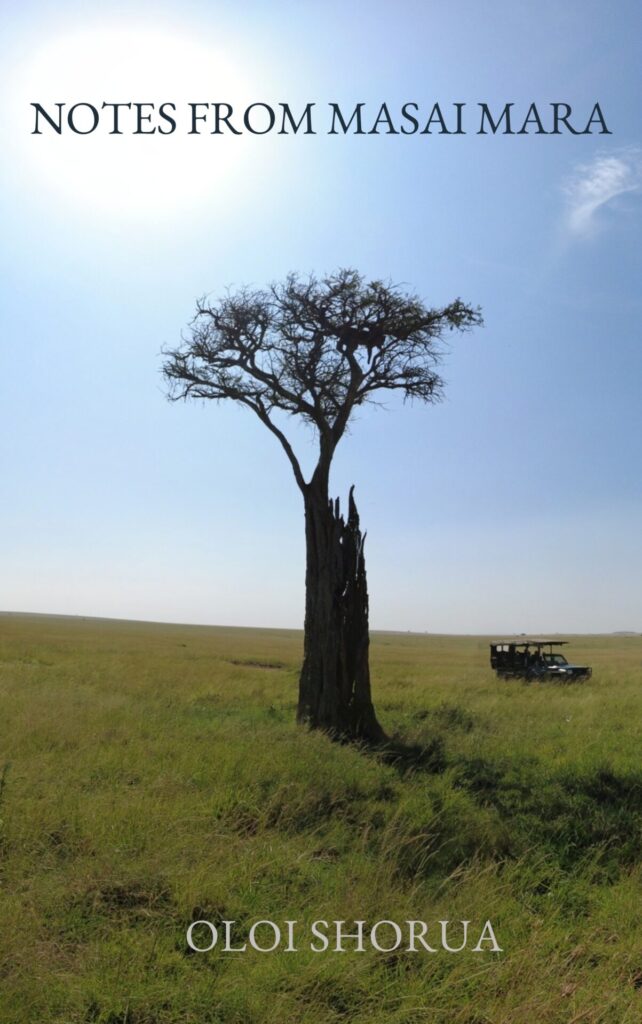
Notes from the Masai Mara records time spent without urgency in one of Africa’s most familiar landscapes.
The journeys described here were made over years, often without fixed itinerary, returning to the same ground long enough for repetition to replace novelty. What emerges is not a catalogue of wildlife or a guide to place, but an account of conditions — of light, stillness, patience, and interruption.
The writing is concerned with the rituals of travel rather than its spectacle: arrival and departure, institutions that endure, and landscapes that resist explanation. Animals appear as part of a system that neither performs nor accommodates, and human presence is observed without centrality.
This book stands on its own while forming part of a continuing body of travel writing that includes Footprints in the African Dust, Under the Skies of Kilimanjaro, and Between Railhead, River, and Mountain. Together, these works record journeys as lived experience — unhurried, unadorned, and attentive to what remains when expectation falls away.
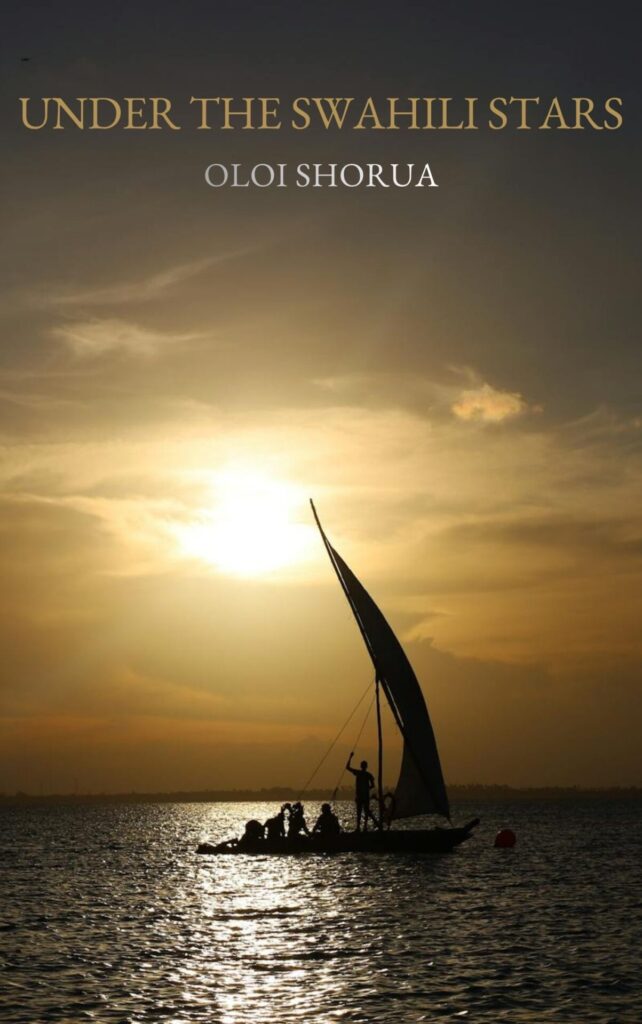
Under the Swahili Stars
Under the Swahili Stars begins where the inland journey releases its hold.
Moving south to north along Kenya’s Indian Ocean coast, this book follows a quieter rhythm shaped by water, light, and habit. From Diani and Mombasa to Watamu, Malindi, and finally Lamu, movement softens. Roads shorten. Boats replace vehicles. Days organise themselves around tide and sound rather than distance covered.
This is not a guidebook and not a catalogue of highlights. It is a record of presence—of beaches walked at low tide, towns entered on foot, meals taken without urgency, and places shaped by centuries of trade along the Swahili coast.
Written with restraint and close observation, Under the Swahili Stars traces how time behaves differently by the sea, and how travel becomes less about arrival and more about staying.
A book about water, memory, and the long patience of the shore.
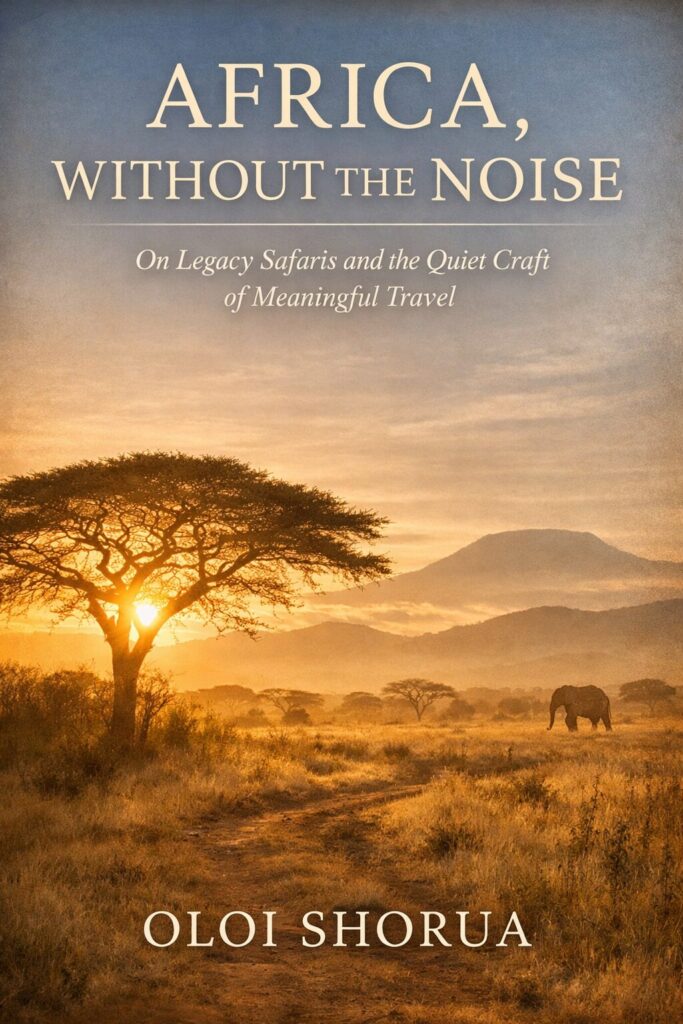
On Legacy Safaris and the Quiet Craft of Meaningful Travel
A safari in Africa can be many things.
A legacy safari is something else entirely.
Africa, Without the Noise is an introduction to the idea of legacy safaris—journeys designed not for immediacy, but for endurance. It explores what it means to travel in Africa in a way that settles into memory, evolves through return, and becomes part of a longer personal or family narrative.
Rather than functioning as a guidebook or itinerary, this book examines the principles that shape meaningful safaris: rhythm, privacy, time, continuity, and the human relationships that anchor experience. It reflects on how modern African travel has evolved, and how intention—more than destination—determines what remains.
Through calm observation and lived perspective, the book considers:
- What defines a legacy safari, and why some journeys endure while others fade
- How pace, space, and presence shape experience in Africa
- The role of continuity in family and milestone journeys
- How thoughtful planning creates coherence rather than complexity
The later chapters introduce how legacy safaris are planned in practice—focusing on conversation, alignment, and restraint rather than listings or logistics. Planning is presented not as control, but as authorship: shaping journeys that feel settled, personal, and capable of return.
Africa, Without the Noise is written for travellers who value depth over coverage, and who understand that the finest journeys are not completed, but carried forward.
Perspective Through Writing
Writing creates distance. It allows travel to settle and take form beyond the moment.
Consequently, these books offer another way of understanding the landscapes we move through—measured, reflective, and unforced.
The Collection
The full body of work is available as a complete collection—reflecting continuity across journeys, landscapes, and time.
👉 View the complete collection on Amazon
Together, these works reflect a long-standing connection with Africa—one that continues to shape both the journeys we design and the way we understand the continent.
Every journey we design reflects this approach—considered, grounded, and shaped by place.
Many journeys include:
- Masai Mara Safari Lodges
- Samburu Safari Lodges
- Amboseli Safari Lodges
- Tsavo Safari Lodges
- Kenya Coast Lodges
- Masai Mara Conservancies
- Laikipia Safari Lodges
- Mathews Range Safari Lodges
- Amboseli and Chyulu Hills
- Central Highlands
- Rift Valley Safari Lodges
- Nairobi Hotels
- Kenya Coastal Resorts
You can also explore:
At Oloi Shorua we design bespoke safari journeys that combine the finest lodges across Africa’s most remarkable wildlife landscapes. Speak with us to begin planning your safari.