
Southern Africa Safaris
Southern Africa produces a safari experience that differs from East Africa in character as much as in geography. The landscapes are more varied — Kalahari sand systems, Okavango flood plains, South African lowveld, Namibian desert escarpments and remote river valleys in Zambia and Zimbabwe. Each country operates according to its own conservation philosophy. Each delivers a distinct quality of wildlife encounter.
What the region shares is generally lower visitor density than East Africa at comparable price points. Strong walking safari traditions exist in Zambia and Zimbabwe. The Okavango Delta, furthermore, is a water safari environment that exists nowhere else on earth in this form.
South Africa
South Africa offers the most accessible entry into Southern Africa safari travel. The Kruger National Park and its adjacent private reserves — particularly the Sabi Sand — provide Big Five wildlife. A direct road or short domestic flight connects the reserves to Johannesburg. The Sabi Sand delivers the finest leopard viewing in Africa. The private reserves produce game drives of considerably greater depth than the national park through off-road access, limited vehicle numbers and highly experienced resident guides.
Uniquely within Africa, South Africa also offers malaria-free Big Five reserves. Madikwe in the North West Province and the Eastern Cape reserves allow families with young children and health-sensitive travellers to experience serious wildlife without prophylaxis. This distinction matters more than it may initially appear. It opens South Africa to a traveller profile that no other significant safari country can accommodate at the same level.
For detailed South Africa planning: South Africa Safari Guide
Botswana
Botswana makes a deliberate policy decision to maintain low visitor numbers through high pricing. The result is the most exclusive safari environment in Africa. The Okavango Delta floods annually, converting desert into a complex of water channels, islands and flood plains. It supports extraordinary biodiversity within a landscape that has no equivalent anywhere on the continent.
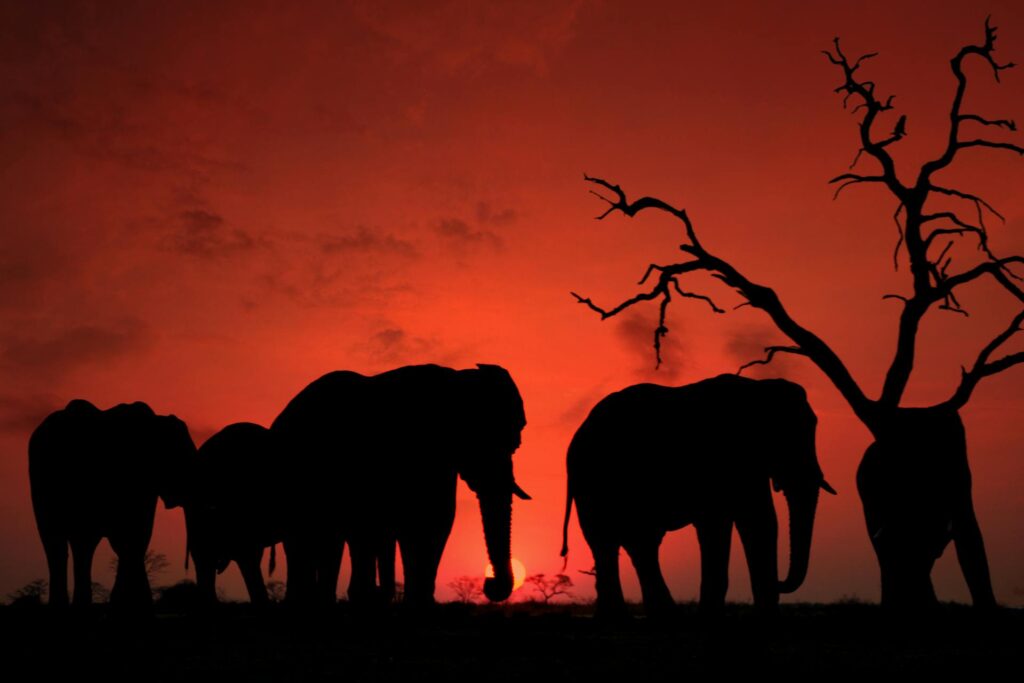
Mokoro canoe travel through the water channels, walking safaris across flood plains and night drives in private concessions produce experiences that vehicle-only game drives cannot replicate. The Chobe National Park, in the north, supports one of the highest elephant densities in Africa. It also delivers river boat safaris along the Chobe waterway. Furthermore, Botswana’s concession system means many camps operate within areas accessible only to their guests — genuine exclusivity rather than the marketed kind.
Zambia and Zimbabwe
Zambia invented walking safaris and they remain most compelling here. The South Luangwa Valley — a river system in eastern Zambia surrounded by dense bush — supports large elephant, lion and leopard populations. Walking experiences here are of exceptional quality. Guides carry a depth of ecological knowledge accumulated over years in one area. The format of walking through the same landscape daily across a week produces a familiarity with the bush that vehicle-based safaris rarely achieve.
Zimbabwe’s Hwange National Park supports the largest elephant population in Africa. Mana Pools on the Zambezi — a UNESCO World Heritage Site — allows walking safaris among elephant and lion at extraordinarily close range, in a manner available nowhere else in the region. Victoria Falls, shared between Zimbabwe and Zambia, ranks among the most powerful geographical spectacles on earth. Consequently, a journey combining Mana Pools or South Luangwa with Victoria Falls represents one of the most complete Southern Africa experiences available.
Namibia
Namibia operates in a different register from the rest of Southern Africa. The Namib Desert — one of the oldest on earth — extends along the Atlantic coast in vast dune systems. These produce a visual experience unlike anything else in Africa. Etosha National Park in the north centres on a pan ecosystem where wildlife gathers around waterholes in the dry season. Game viewing from fixed viewpoints here is as rewarding as mobile drives.
Namibia also carries the world’s largest cheetah population outside protected areas — on commercial farmland where human-wildlife coexistence is a live conservation question. The country suits travellers drawn to landscape as much as wildlife. Because Namibia maintains its road network well and distances are manageable, it rewards slower overland travel in a way that few African destinations do.
How Southern Africa Journeys Are Structured
Southern Africa’s geography lends itself to multi-country journeys more naturally than East Africa. Botswana and Zimbabwe share a border at the Chobe-Victoria Falls corridor, making a combined journey logistically straightforward. South Africa connects to Zimbabwe and Zambia by short domestic flight. Namibia works either as a standalone self-drive journey or combined with Botswana’s Okavango for contrasting environments within the same trip.
Internal charter flights connect the remote concessions and camps across most of the region. Transfers between countries typically route through Johannesburg as the regional hub. However, the walking safari circuits in Zambia and Zimbabwe are best reached directly from Lusaka or Harare. This reduces transfer time and allows more days in the field.
For a broader planning framework: African Safari Guide
For a complete safari overview: The Complete Guide to African Safaris
If you are considering a Southern Africa journey and would prefer a more informed approach to planning, we would be pleased to begin with a conversation.