
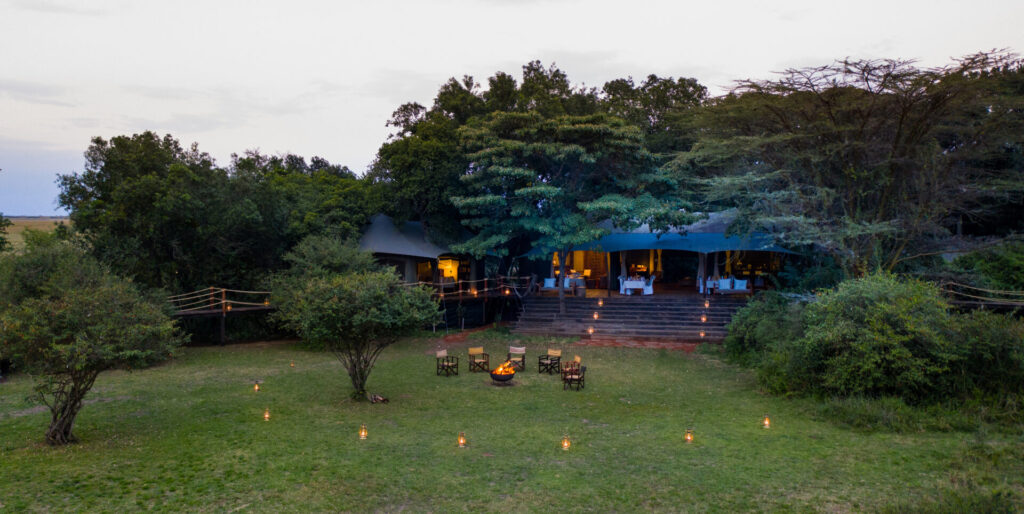
Mara Plains Camp
Olare Motorogi Conservancy, Maasai Mara — Great Plains Conservation
Mara Plains Camp sits within the Olare Motorogi Conservancy, a 35,000-acre private wildlife area bordering the northern edge of the Maasai Mara National Reserve. Great Plains Conservation operates the camp, combining classic East African safari style with exceptional guiding. Guests consequently have access to both the conservancy and the reserve — a dual access arrangement that gives considerable flexibility in how days in the field are spent.
Seven canvas suites on raised wooden decks overlook the Ntiakitiak River and the surrounding plains. The camp is small by design. That scale keeps the guiding attentive and the atmosphere genuinely quiet — in a way that larger camps in the same ecosystem cannot replicate.
Location and Landscape
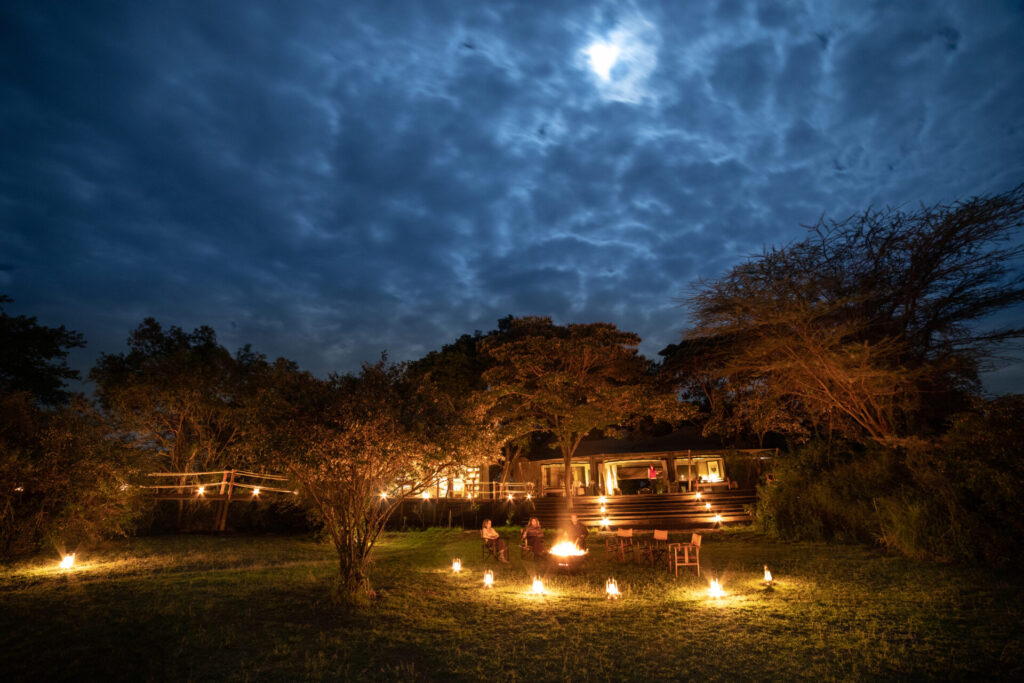
The Olare Motorogi Conservancy supports some of the highest predator densities in the Mara ecosystem. Guests encounter lions, leopard and cheetah regularly. The conservancy’s restricted visitor numbers mean that sightings carry a quality of space and calm. The main reserve, with its considerably higher vehicle density, cannot always provide this.
The camp sits on the meandering bends of the Ntiakitiak River, within a ribbon of riverine forest dropping to open plains in every direction. During the Great Migration between July and October, wildebeest and zebra move through the conservancy in large numbers. They occasionally produce the concentrated wildlife scenes that draw people to the Mara in the first place — without the vehicle convoys the main reserve typically brings.
Accommodation
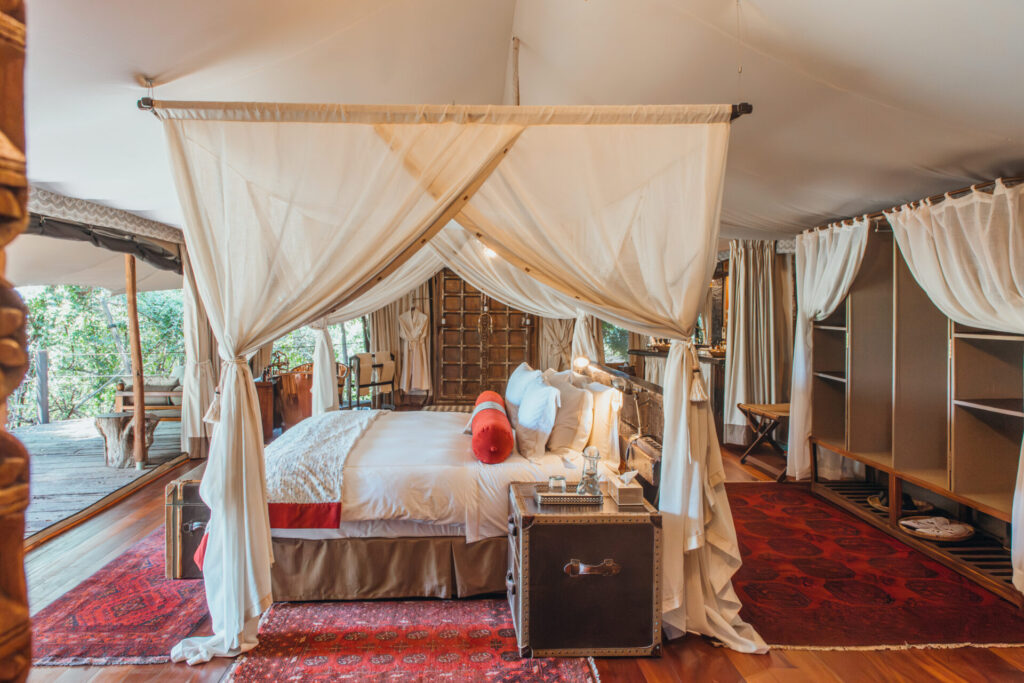
The seven canvas suites are designed with the landscape rather than against it. Large verandas extend over the plains. Bathrooms are spacious and well-appointed. The interiors work in a palette drawn from the surrounding bush rather than imposing colour or pattern on it. The overall effect is of a camp that feels settled and purposeful rather than theatrical.
Great Plains Conservation places a strong emphasis on conservation programming alongside the safari experience. Guests at Mara Plains contribute directly to the conservancy’s land lease agreements with local Maasai communities. This arrangement keeps the land open for wildlife and economically viable for the people who live alongside it.
Safari Experience
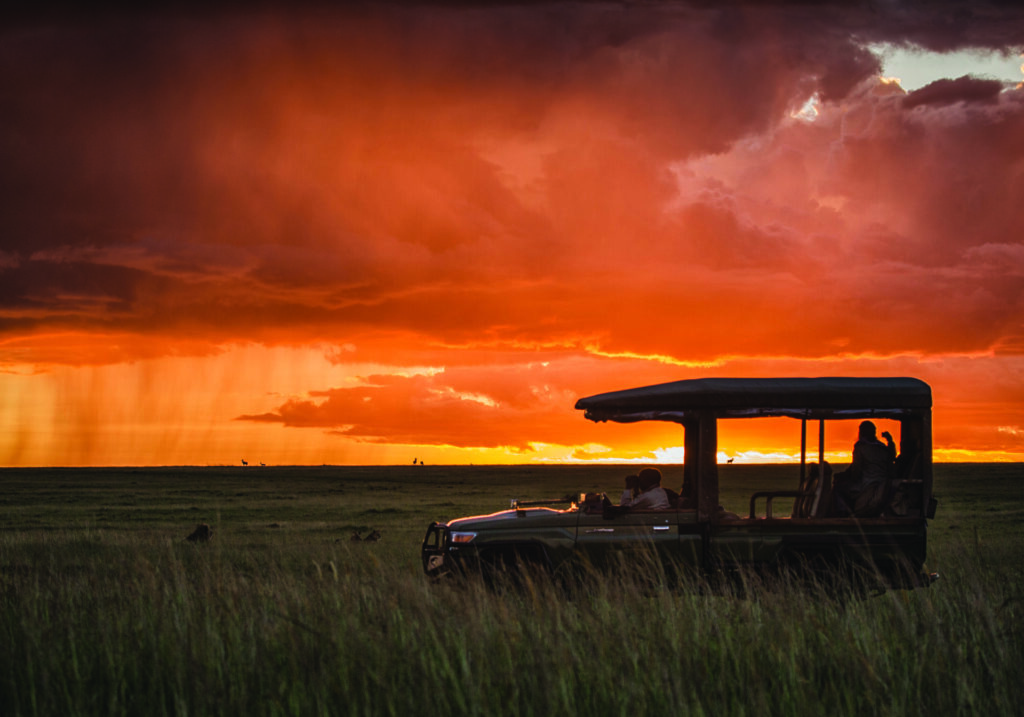
Game drives operate in both the Olare Motorogi Conservancy and the Maasai Mara National Reserve. Inside the conservancy, guides may drive off-road and follow animal movements through the bush. This is the single most significant practical difference between conservancy and national reserve game viewing. Night drives are also available within the conservancy. The reserve does not permit night drives — and they consistently produce encounters with nocturnal species including serval, aardwolf, bush baby and hunting lion.
Mara Plains carries a particular reputation for photographic safaris. The camp provides custom photographic vehicles with dedicated camera mounts and bean bag supports. Furthermore, even guests without professional equipment find the vehicles offer a noticeably different platform for wildlife observation than a standard open-sided game vehicle.
Bush walks with experienced guides are available. The Mara is not traditionally a walking safari destination in the way that the Luangwa Valley is. However, walking here adds a layer of understanding of the landscape and its smaller details that vehicle-based drives cannot provide.
When to Visit
The conservancy produces strong wildlife viewing throughout the year. Between July and October, the Great Migration brings large concentrations of wildebeest and zebra into the ecosystem, with the associated predator activity that follows. December through March delivers clear skies, excellent big cat sightings and lower visitor numbers than the peak migration season. April and May bring lush landscapes and considerably reduced rates. The camp’s small size makes the green season particularly rewarding for those who value solitude.
Combining Mara Plains with Other Kenya Destinations
Mara Plains works well as part of a wider Kenya safari moving through contrasting ecosystems. Laikipia to the north offers highland terrain, rhino and wild dog — a landscape that differs entirely from the open Mara plains. Amboseli provides the Kilimanjaro backdrop and the finest elephant viewing in East Africa. Additionally, the Kenya coast — Diani, Watamu or Lamu — closes a safari journey with a natural transition to the Indian Ocean.
Kenya Safari Guide: Kenya Safari Guide — Mara Conservancies: Mara Conservancies Safari Lodges — All Kenya Regions: Luxury Kenya Safari Lodges
If you are considering Mara Plains Camp as part of a Kenya safari, we would be pleased to begin with a conversation.
Great Plains Conservation — greatplains.com
Kenya Wildlife Service — kws.go.ke