
Zambia Safari Guide | Regions, Seasons and Planning | Oloi Shorua
Zambia Safari Guide
Regions, seasons, cost and planning — a considered overview
Zambia occupies a particular place in safari history. The walking safari, as it is now practised across the continent, was developed here in the 1950s by Norman Carr in what is today South Luangwa National Park — and that origin still shapes how the country is experienced. Where much of East Africa is built around the vehicle, Zambia is built around the guide on foot, and the difference in pace and attention is immediately apparent to anyone who has safaried elsewhere first.
This Zambia safari guide sets out the regions, seasonal patterns and planning decisions behind a well-built Zambia journey, with particular attention to where walking safaris work best and how they differ from the country’s vehicle-based and canoe-based alternatives.
For broader regional context, see our Safari Guide — Africa, or compare with neighbouring Zimbabwe Safari Guide and Botswana Safari Guide.
Why Travel to Zambia
Zambia’s guiding standards are widely regarded as among the most rigorous on the continent. Qualification as a walking guide here requires years of apprenticeship and a formal licensing process considerably more demanding than in many neighbouring countries, and the resulting fieldcraft — reading tracks, interpreting animal behaviour at close range, managing an encounter on foot — is something travellers notice within the first walk.
The country also remains comparatively uncrowded. Camp numbers across South Luangwa, the Lower Zambezi and Kafue stay modest relative to the size of the wilderness involved, and several regions — North Luangwa and Liuwa Plain in particular — see only a handful of visitors across an entire season. For travellers who have already covered the more established East and Southern African circuits, Zambia frequently functions as the next, quieter chapter.
Main Safari Regions
South Luangwa National Park
South Luangwa is Zambia’s signature park and the spiritual home of the walking safari. The Luangwa River winds through a landscape of oxbow lagoons, ebony groves and open floodplain, and the concentration of wildlife along its banks during the dry season ranks among the densest in Africa. Leopard sightings here are particularly reliable — the park’s combination of riverine cover and high prey density makes it one of the most consistent leopard destinations on the continent.
Walking safaris in South Luangwa typically run as a mix of half-day walks from a static camp and multi-night mobile walking safaris, where camp moves with the traveller along a planned route. Both formats slow the pace of a day considerably and shift the focus from covering distance to reading the landscape in detail.
Lower Zambezi National Park
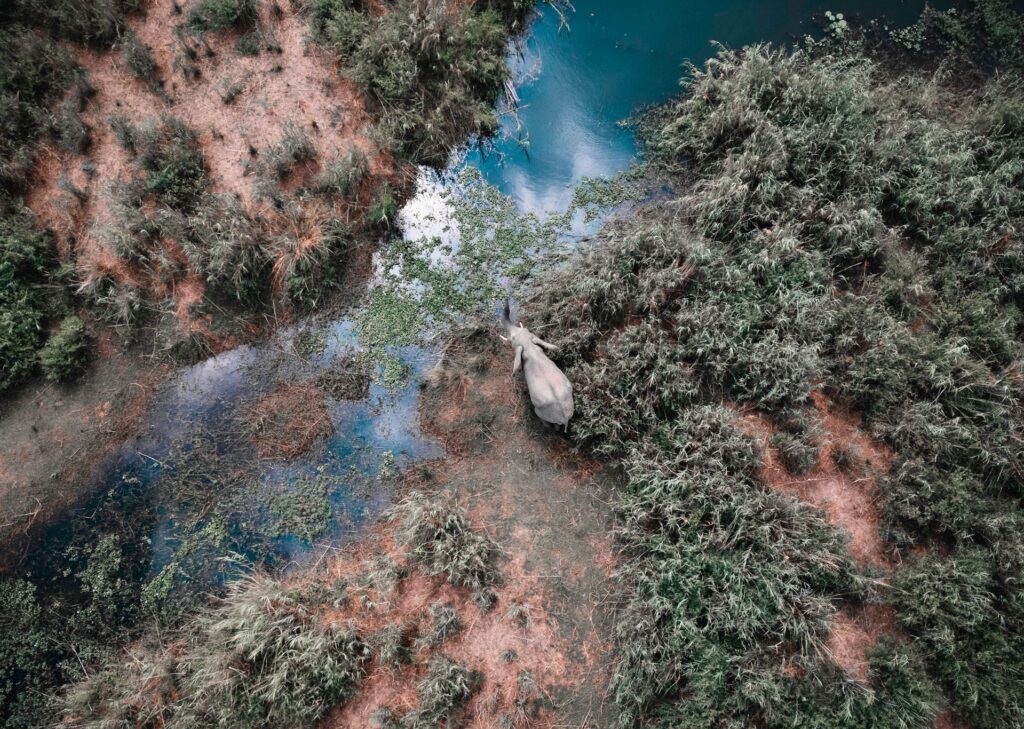
The Lower Zambezi sits across the river from Zimbabwe’s Mana Pools, sharing the same floodplain ecosystem but offering a distinct vantage point. Canoe safaris here are a defining activity — paddling silently past pods of hippo and grazing elephant delivers a perspective and proximity that no vehicle replicates. The park’s elephant population is substantial, and sightings of bull elephant standing in the river itself, feeding on submerged grass, are a recurring feature of a Lower Zambezi visit.
Fishing for tiger fish along the Zambezi channels adds a further activity option, and the area’s accessibility from Lusaka — a short flight or a manageable road transfer — makes it a practical addition to a wider Zambia itinerary.
Kafue National Park
Kafue is one of the largest national parks in Africa, and its size brings genuine ecological range within a single protected area — from the seasonally flooded Busanga Plains in the north to dense woodland and miombo forest further south. Busanga in particular holds strong populations of lion, cheetah and red lechwe, an antelope species adapted specifically to the floodplain margins, and its open grassland produces a visual character closer to the Serengeti than to the riverine intimacy of South Luangwa.
Because Kafue’s road infrastructure remains less developed than South Luangwa’s, most visitors reach it by light aircraft, and the park’s relative remoteness keeps visitor numbers low even in peak season.
North Luangwa National Park
North Luangwa operates under a walking-only model, with no permanent lodges and access restricted to a small number of mobile operators running multi-night walking safaris. This is Zambia at its most unmediated — no fixed camps, no game-drive vehicles competing for the same sighting, and a guiding standard that assumes travellers are seeking the discipline of the walk itself rather than a checklist of species. It suits experienced safari travellers specifically, rather than a first African journey.
Liuwa Plain National Park
In Zambia’s remote western province, Liuwa Plain hosts the second-largest wildebeest migration in Africa — a movement of tens of thousands of animals across open floodplain that receives a fraction of the attention given to East Africa’s Serengeti-Mara system. Access requires a dedicated light aircraft charter, and infrastructure remains deliberately minimal, but for travellers drawn to scale and solitude in equal measure, Liuwa offers both.
Victoria Falls and Livingstone
On Zambia’s southern border, Livingstone provides direct access to Victoria Falls and a natural closing or opening point for a Zambia itinerary. The Zambian side of the falls offers a different vantage to the Zimbabwean side, along with activities including white-water rafting, microlight flights over the gorge and sundowner cruises on the upper Zambezi. Most journeys allocate two to three nights here, either as an introduction before heading into the bush or as a decompression point afterward.
Wildlife Highlights
- Leopard: South Luangwa is among the most consistent leopard destinations in Africa, a product of dense riverine cover and high prey availability.
- Elephant: the Lower Zambezi holds a substantial population, with river-feeding behaviour a distinctive sighting.
- Wildebeest: Liuwa Plain hosts the second-largest wildebeest migration on the continent, almost entirely overlooked by mainstream safari planning.
- Cheetah and red lechwe: the Busanga Plains in Kafue support both in numbers uncommon elsewhere in Zambia.
- Hippo: dense populations along the Zambezi and Luangwa rivers are best appreciated from a canoe rather than a vehicle.
Best Time to Visit Zambia
Zambia’s seasons are pronounced, and this Zambia safari guide treats timing as a function of activity choice as much as wildlife visibility — walking safaris, canoeing and game drives each have their own optimal window.
June to August
Cool, dry and the start of the prime walking safari season, as bush vegetation thins and tracking conditions improve. Mornings can be cold, particularly along the rivers, but visibility and comfort both favour this period.
September and October
The hottest, driest months and generally the peak of game viewing in South Luangwa and the Lower Zambezi, as wildlife concentrates tightly around the remaining water. Walking conditions remain excellent despite the heat, provided activity is scheduled around the cooler hours.
November to April
The wet, green season. Many walking camps and North Luangwa close entirely, as wildlife disperses and access becomes difficult. However, this period suits birdlife enthusiasts, and a small number of South Luangwa camps remain open on a limited, vehicle-based basis, offering a markedly different, lusher version of the park.
May
A transitional month as the rains end and the bush begins drying out, often delivering strong value before the peak season prices and crowds arrive.
Different Travel Styles
The Classic Walking Safari
A static or semi-mobile camp in South Luangwa combining half-day walks with vehicle-based game drives, suited to travellers wanting to experience Zambia’s guiding tradition without committing to a fully mobile itinerary.
Fully Mobile Walking Journeys
Multi-night treks across South Luangwa or North Luangwa, with camp relocating along the route. This format demands more of a traveller physically but delivers the most complete version of Zambia’s walking heritage.
River-Focused Itineraries
Built around the Lower Zambezi, combining canoeing, fishing and game drives along the floodplain, generally paired with a Victoria Falls extension given the geographic proximity.
Remote and Low-Volume Journeys
Kafue’s Busanga Plains, North Luangwa and Liuwa Plain together form an itinerary for travellers who have already experienced Zambia’s main circuit and want the country’s quieter, harder-to-reach corners.
Practical Planning Considerations
- Internal travel: light aircraft connect Lusaka, South Luangwa, Lower Zambezi, Kafue and Livingstone; some South Luangwa camps are also reachable by road, though transfer times can run long.
- Seasonal closures: several walking-focused camps, particularly in North Luangwa, operate only during the dry season and close entirely during the rains — worth confirming early when planning.
- Pace: three to four nights per region allows enough time for both walking and vehicle-based activity without the itinerary feeling rushed.
- Combining regions: South Luangwa and the Lower Zambezi connect reasonably efficiently via Lusaka; Kafue and Liuwa generally require more dedicated flight time and are best planned as deliberate additions rather than quick add-ons.
Entry Requirements
Most nationalities require a visa to enter Zambia, available online in advance or on arrival at major entry points; a joint Zambia-Zimbabwe KAZA visa is also available for travellers combining both countries around Victoria Falls. A passport valid for at least six months beyond the date of travel is required, along with proof of yellow fever vaccination for travellers arriving from, or having transited through, certain countries. Requirements vary by nationality and are worth confirming directly ahead of travel.