
Rwanda Safari Guide | Regions, Seasons and Planning | Oloi Shorua
Rwanda Safari Guide
Regions, seasons, cost and planning — a considered overview
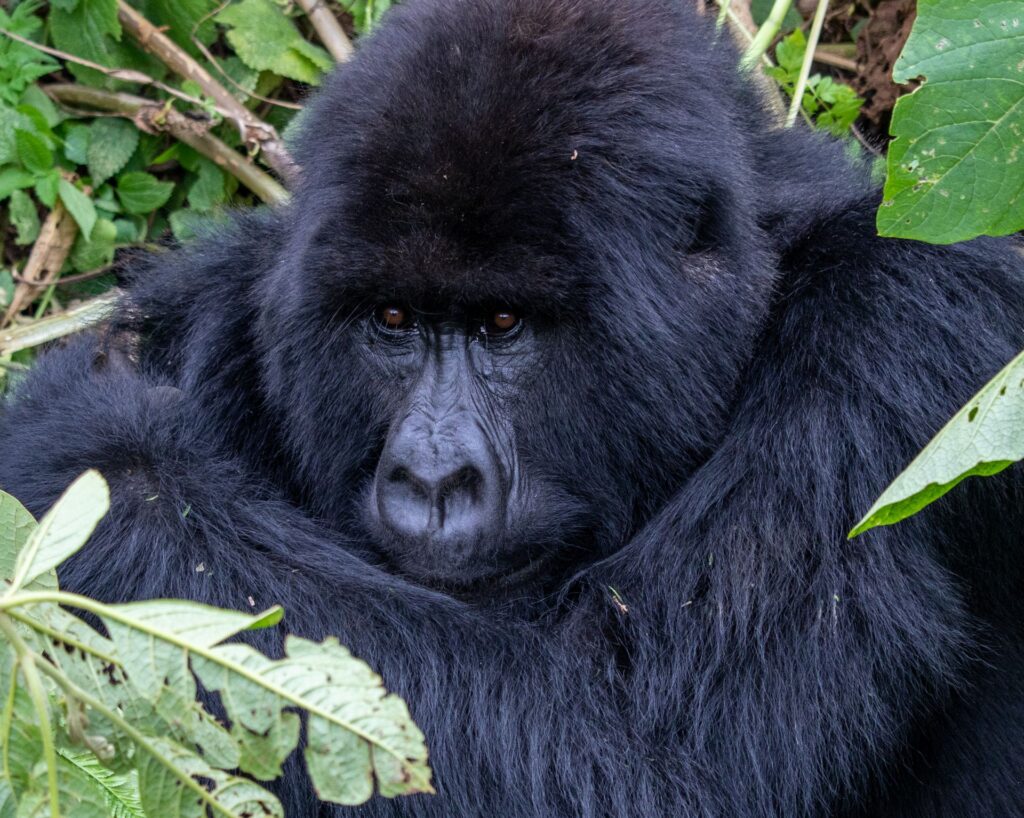
Rwanda built its modern safari identity around a single, extraordinary encounter. In the Volcanoes National Park, visitors can spend an hour with a wild mountain gorilla family, at close range, under conditions designed to minimise impact on one of the most endangered great apes on earth. This experience anchors most Rwanda itineraries, but it is far from the only reason to spend time in this country.
This Rwanda safari guide sets out the regions, permit logistics and planning considerations behind a well-built Rwanda journey. Gorilla trekking matters, but so does the country’s broader recovery story, its dense forest ecosystems, and its emergence as a genuine multi-park destination rather than a single-experience stop.
For broader regional context, see our Safari Guide — Africa, or compare with neighbouring Uganda Safari Guide and Tanzania Safari Guide.
Why Travel to Rwanda
Rwanda’s conservation model is unusually deliberate. Gorilla permit revenue funds a significant share of national park management, and a portion is directed back into communities bordering the parks, tying local livelihoods to the survival of the species rather than positioning conservation against them. The mountain gorilla population in the Virunga massif, shared across Rwanda, Uganda and the Democratic Republic of Congo, has grown steadily over recent decades, one of the rare conservation success stories among the great apes.
Beyond gorillas, Rwanda offers a compact, well-connected country where road transfers between parks rarely exceed a few hours. Kigali itself has become a genuinely pleasant base, clean and orderly by regional standards, with a memorial and museum sector that adds meaningful depth for travellers willing to spend a day understanding the country’s history before heading into the forest.
Main Safari Regions
Volcanoes National Park
Volcanoes National Park sits along the Virunga range in Rwanda’s northwest, home to roughly a dozen habituated gorilla groups available for trekking. Trek difficulty varies by group, from a relatively short walk through bamboo forest to a more demanding multi-hour climb across volcanic slopes, and permit allocation determines which group a visitor reaches rather than personal preference alone.
The park also holds golden monkey populations, trekked under a separate, less expensive permit, and several volcano summits — including Mount Bisoke and Mount Karisimbi — open to fit travellers seeking a more demanding day in the same landscape. Dian Fossey’s former research camp at Karisoke remains a point of historical interest within the park.
Nyungwe National Park
Nyungwe protects one of the oldest montane rainforests in Africa, a dense, high-altitude ecosystem holding thirteen primate species, including a large population of chimpanzee. Chimp tracking here is more physically demanding than gorilla trekking in Volcanoes, given the terrain and the chimpanzees’ tendency to move quickly through the canopy, but sightings reward the effort with extended observation of complex social behaviour.
A canopy walkway suspended above the forest floor offers a different vantage entirely, and Nyungwe’s birdlife — including several species found nowhere else in Rwanda — draws a steady stream of dedicated birders independent of the primate trekking.
Akagera National Park
In Rwanda’s east, bordering Tanzania, Akagera presents a savanna landscape entirely unlike the forested west of the country. Following years of degradation during and after the genocide, a sustained reintroduction programme returned lion in 2015 and eastern black rhino in 2017, restoring the park’s Big Five status and turning Akagera into one of the more compelling conservation recovery stories in the region.
Game drives here cover open savanna, papyrus swamp and a chain of lakes that support healthy hippo and crocodile populations, and a boat safari on Lake Ihema adds a further activity rarely associated with a Rwanda itinerary.
Kigali
Most Rwanda itineraries begin or end in Kigali, and the city merits more than an overnight stopover. The Kigali Genocide Memorial provides a sober, necessary grounding in the country’s history, and the contrast between that history and the city’s current order and ambition says something about Rwanda that no game drive can replicate. A half-day here, before or after the parks, adds context that meaningfully changes how the rest of the trip is understood.
Wildlife Highlights
- Mountain gorilla: Volcanoes National Park offers some of the most accessible and reliable trekking of any Virunga range location.
- Chimpanzee: Nyungwe holds a substantial population, tracked through demanding but rewarding rainforest terrain.
- Golden monkey: endemic to the Virunga region, trekked on a separate permit within Volcanoes National Park.
- Lion and black rhino: both reintroduced to Akagera within the past decade, restoring the park’s Big Five status.
- Birdlife: Nyungwe in particular supports species found nowhere else in the country, drawing dedicated birding interest.
Best Time to Visit Rwanda
Rwanda’s equatorial climate means temperatures stay relatively stable year-round, so timing in this Rwanda safari guide centres more on rainfall and trekking conditions than on dramatic seasonal wildlife shifts.
June to September
The long dry season and the most popular trekking window. Forest trails are firmer and more manageable, and game viewing in Akagera benefits from thinner vegetation around water sources.
December to February
A shorter dry spell that offers similar trekking conditions to the June to September window, generally with fewer visitors and slightly lower demand on permits.
March to May and October to November
The two wet seasons. Trails become muddier and more physically demanding, particularly in Nyungwe, though gorilla and chimp behaviour remains largely unaffected, and the forest itself looks markedly more lush during these months.
Different Travel Styles
The Gorilla-Focused Short Trip
A compact four to five night itinerary combining Volcanoes National Park with a day or two in Kigali, suited to travellers adding Rwanda onto a wider East Africa journey rather than building a dedicated trip around it.
The Full Rwanda Circuit
Extending to eight or nine nights, this style combines Volcanoes, Nyungwe and Akagera, giving a fuller sense of the country’s range — primate trekking, rainforest and savanna game viewing within a single, well-connected itinerary.
Rwanda and Uganda Combined
Given Rwanda’s permit pricing and Uganda’s broader park network, many travellers split gorilla trekking between the two countries or combine a Rwanda trek with Uganda’s chimpanzee and savanna parks, accessible by a manageable road crossing or short flight.
Practical Planning Considerations
- Permit booking: gorilla permits are limited in number and frequently sell out months in advance during peak season, so trekking dates should be secured early in the planning process.
- Fitness: trekking difficulty varies considerably by gorilla group and by season; travellers with limited fitness should communicate this clearly so a suitable group can be requested.
- Internal travel: road transfers connect Kigali, Volcanoes and Nyungwe directly; Akagera is also reachable by road, though a short flight saves considerable time on a tighter itinerary.
- Photography rules: flash photography is prohibited during gorilla treks, and a minimum distance from the animals is enforced throughout, both for the animals’ wellbeing and disease prevention.
Entry Requirements
Most nationalities can obtain a Rwandan visa on arrival or in advance online, and Rwanda also participates in the East Africa Tourist Visa alongside Kenya and Uganda for travellers combining all three. A passport valid for at least six months beyond the date of travel is required, along with proof of yellow fever vaccination for travellers arriving from, or having transited through, certain countries. Requirements vary by nationality and are worth confirming directly ahead of travel.