
Angama Mara
Oloololo Escarpment, Maasai Mara — Angama
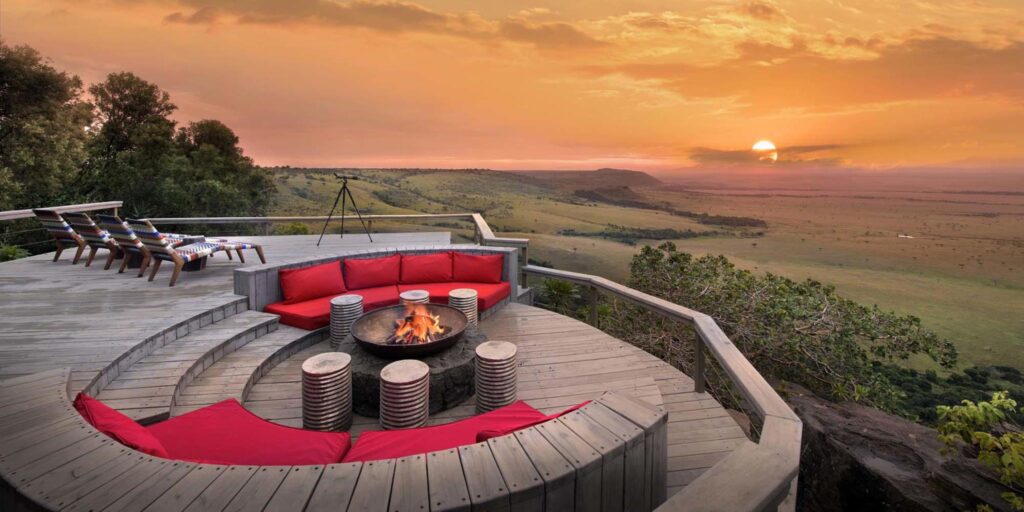
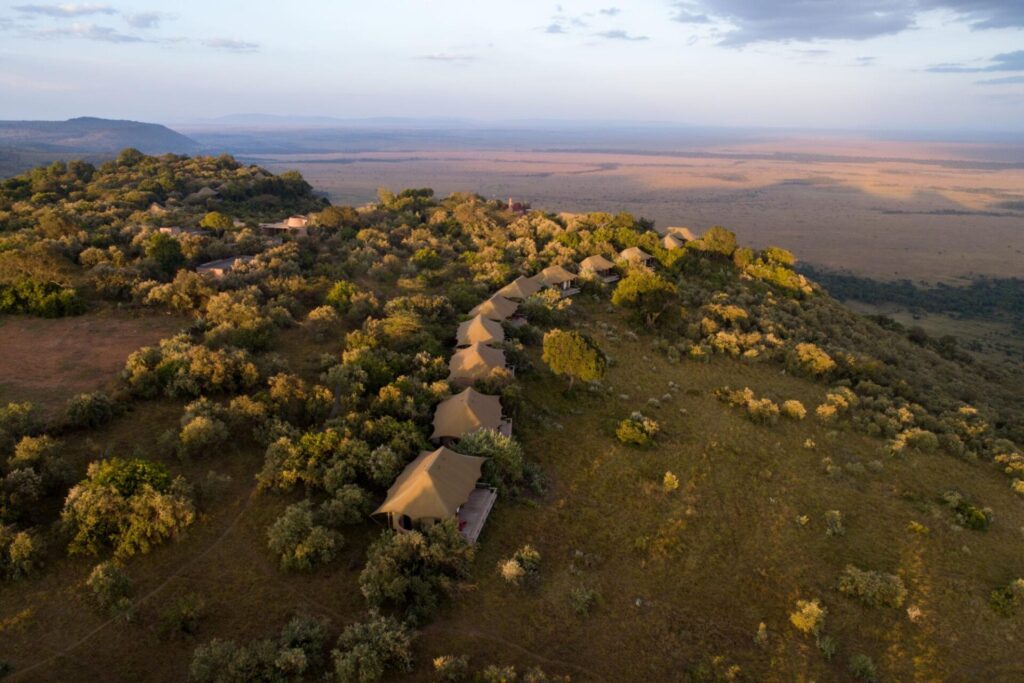
Angama Mara sits on the edge of the Oloololo Escarpment, 300 metres above the Maasai Mara plains. The name means suspended in mid-air in Swahili, and the lodge earns it — the view from the escarpment edge stretches across the entire Mara Triangle to the Tanzanian border, encompassing one of the largest continuous wildlife landscapes in Africa in a single uninterrupted panorama.
The lodge divides into two intimate camps — North Camp and South Camp — each operating independently with fifteen tented suites along the escarpment. The design is contemporary rather than period, using glass, canvas and open architecture to dissolve the boundary between interior and landscape. The floor-to-ceiling glass fronts open entirely, allowing the Mara to become part of the room rather than something observed from it.
Location and Landscape
The Oloololo Escarpment forms the western wall of the Mara Triangle — the section of the Maasai Mara National Reserve managed by the African Wildlife Foundation. The Triangle carries lower visitor numbers than the eastern reserve and consistently delivers some of the strongest game viewing in the ecosystem. Big cat density is high throughout the year. During the Great Migration between July and October, wildebeest and zebra cross the Mara River in the Triangle before moving eastward — placing Angama’s guests on the optimal side of the reserve for witnessing the crossings.
The escarpment setting itself is part of what makes Angama distinctive. The perspective from above rather than within the landscape produces a different quality of observation — more panoramic, more compositional, more connected to the scale of the ecosystem as a whole. Game drives descend to the plains each morning, but the view from camp at sunrise and dusk is an experience independent of wildlife entirely.
Accommodation
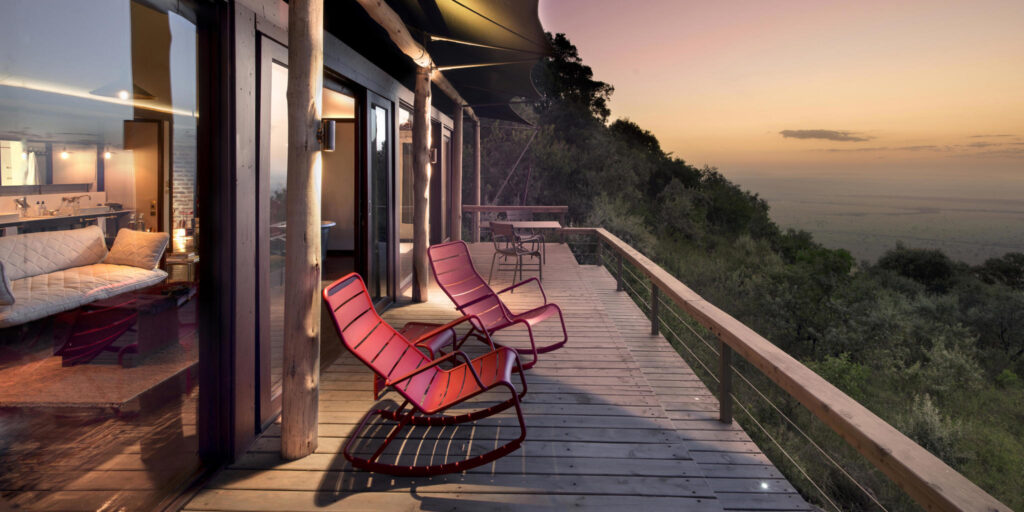
The thirty suites across both camps share the same design language — open glass architecture, large viewing decks cantilevered over the escarpment edge, spacious interiors that work in neutral tones drawn from the landscape below. Bathrooms face the plains. The sitting areas are designed for extended contemplation of the view rather than brief occupation. The overall atmosphere is one of purposeful restraint — the architecture steps back to allow the landscape to dominate in the way that the escarpment position makes possible.
The two camps can be booked independently or together for exclusive-use groups. North and South Camp share guiding and vehicle resources but operate as separate social environments — an arrangement that suits private groups who want proximity without overlap, as well as individual travellers who prefer a smaller camp atmosphere within a larger property.
Safari Experience
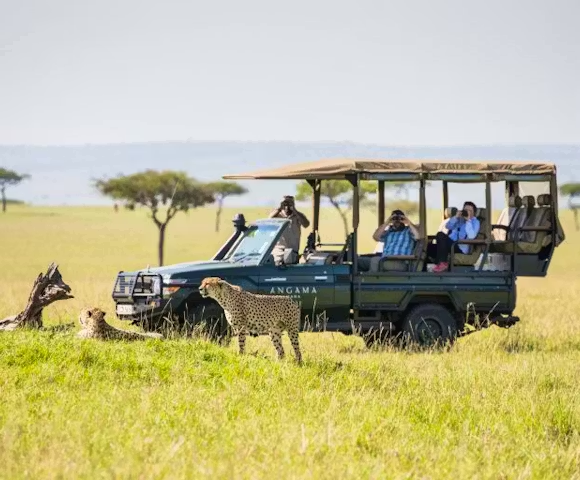
Game drives access the Mara Triangle and the wider Maasai Mara National Reserve. The Triangle’s lower visitor numbers give drives here a quality of space that the eastern reserve cannot consistently provide. Guides work the terrain carefully — the Mara Triangle has high predator density and produces strong lion, cheetah and leopard sightings throughout the year.
Angama has built a strong reputation for photographic safaris. The camp provides dedicated photographic guiding for guests who want to develop their wildlife photography skills alongside the game drive experience. Hot air balloon safaris over the Mara Triangle launch from nearby and connect back to a bush breakfast on the plains — an established addition to the Mara experience that the escarpment setting makes particularly rewarding at dawn.
Cultural visits to local Maasai communities complement the wildlife focus and provide context for the landscape and the conservation model that keeps it functioning. The Angama Foundation supports both community and conservation initiatives across the region, and that work is visible in how the camp engages with its neighbours.
When to Visit
The Mara Triangle produces strong wildlife viewing throughout the year. Between July and October, the Great Migration concentrates wildebeest and zebra in the Triangle before the river crossings, making this the most sought-after season. December through March delivers clear skies, dry conditions and excellent predator activity. April and May bring lush green landscapes, substantially lower visitor numbers and considerably reduced rates — for travellers who know the Mara well, the green season offers a genuinely different quality of experience.
Combining Angama Mara with Other Kenya Destinations
Angama works well as the opening or closing camp in a wider Kenya circuit. Laikipia to the north offers highland terrain, rhino and wild dog in a landscape that differs entirely from the open Mara plains. Samburu provides the northern frontier ecosystem and the Samburu Special Five. Amboseli combines the finest elephant viewing in East Africa with the Kilimanjaro backdrop. The Kenya coast closes a journey naturally at the Indian Ocean.
For Kenya planning: Kenya Safari Guide
For Masai Mara lodges: Masai Mara Safari Lodges
For all Kenya regions: Luxury Kenya Safari Lodges
If you are considering Angama Mara as part of a Kenya safari, we would be pleased to begin with a conversation.
Angama Mara — angama.com
Kenya Wildlife Service — kws.go.ke
The Oloi Selects view of Angama Mara
Angama Mara sits on the Oloololo Escarpment above the Mara plains, so the view is the point. It is a polished, larger camp rather than an intimate one.
At a glance
- 30 tented suites in two identical camps of 15, each camp with four interconnected suites in two pairs
- Suites of over 100 sqm including the deck
- On the Oloololo Escarpment, about 1,000 ft above the plains, bordering the Mara Triangle
- A private road to the Reserve entrance, about 10 minutes
- About 45 minutes by air from Nairobi
- Rates are all-inclusive
Who it suits
Travellers who want a dramatic vantage point, a high standard of service, morning balloon safaris and Rift Valley walks, and who are comfortable with a camp of this size.
Who it does not suit
Guests who want a very small, owner-run camp, or who want to wake at river level. The lodge looks down on the plains rather than sitting on them.
Its place in a route
It pairs well with a second, smaller camp on a conservancy or at the river, so the stay includes both the view and a quieter, closer style of game viewing.
Families
Children of all ages are welcome, with no minimum age. Children 12 and under share a triple with a parent or sibling unless an extra suite is booked. Families with children aged 0 to 6 must reserve a private vehicle when booking fewer than three suites. Each camp has four interconnected suites.
Getting there
Scheduled flights from Wilson Airport run several times a day, or a private charter can be arranged from Jomo Kenyatta International. The flight is about 45 minutes.
What the rate usually excludes
Park and conservation fees, balloon safaris and transfers are the items to check on any Mara camp. We confirm this in your quote.
What we would choose instead
For a camp with a river frontage and a more intimate scale, we look at Ishara or the smaller camps in the Mara.
Last checked against the property’s own information: October 2026. Details change, so we confirm them again when we quote your itinerary.