
Sand River Masai Mara
Southern Maasai Mara National Reserve — Elewana Collection
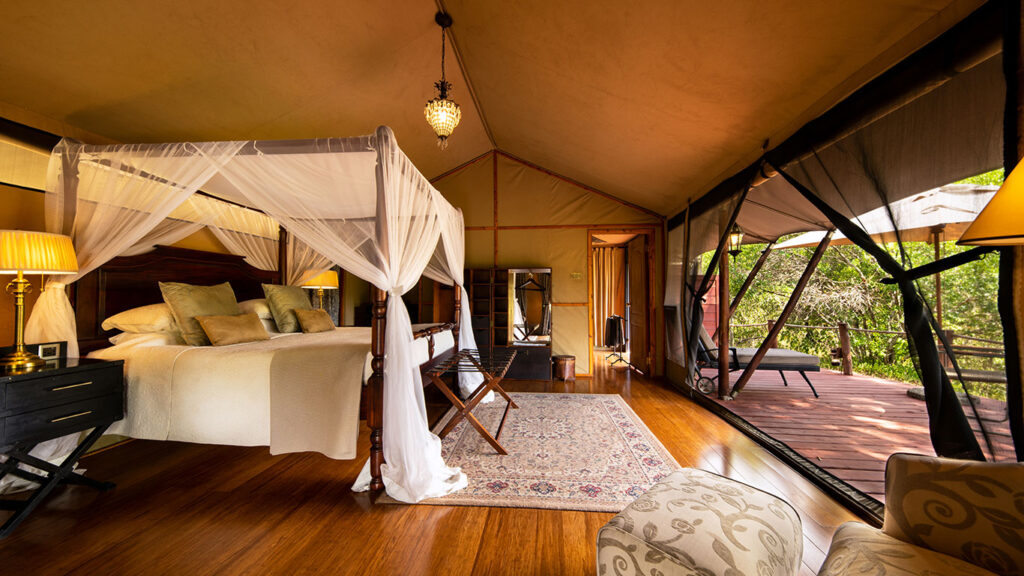
Sand River Masai Mara sits in the southern Maasai Mara National Reserve, close to the Tanzania border. The camp belongs to the Elewana Collection and takes the golden age of safari exploration as its design reference. Four-poster beds, polished timber interiors and freestanding bathtubs define the aesthetic. Additionally, the location near the Sand River gives it one of the best migration positions in the reserve.
When wildebeest and zebra move north from the Serengeti, they cross the Sand River before entering Kenyan territory. Consequently, this camp receives the herds at the earliest point of their Kenyan journey. For guests who want to understand the Migration from entry to crossing, the southern position matters considerably.
Location and Landscape
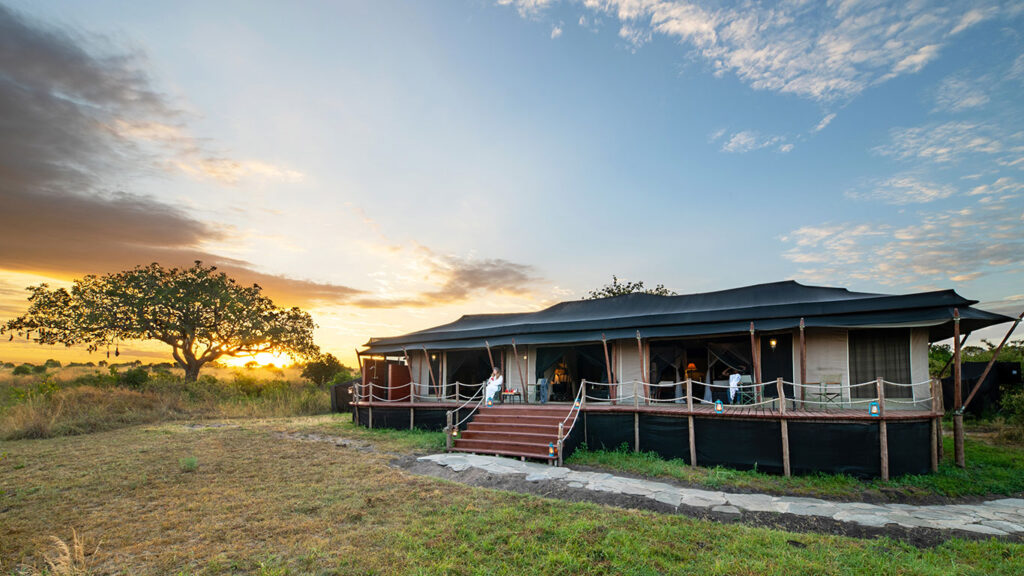
The southern Maasai Mara is less visited than the central and northern reserve sections. However, the wildlife is equally strong. Open savannah, seasonal riverbeds and scattered acacia provide varied habitat throughout the year. Furthermore, the Tanzania border gives the landscape a sense of the ecosystem’s full continental scale — the Serengeti lies just across the line.
Accommodation
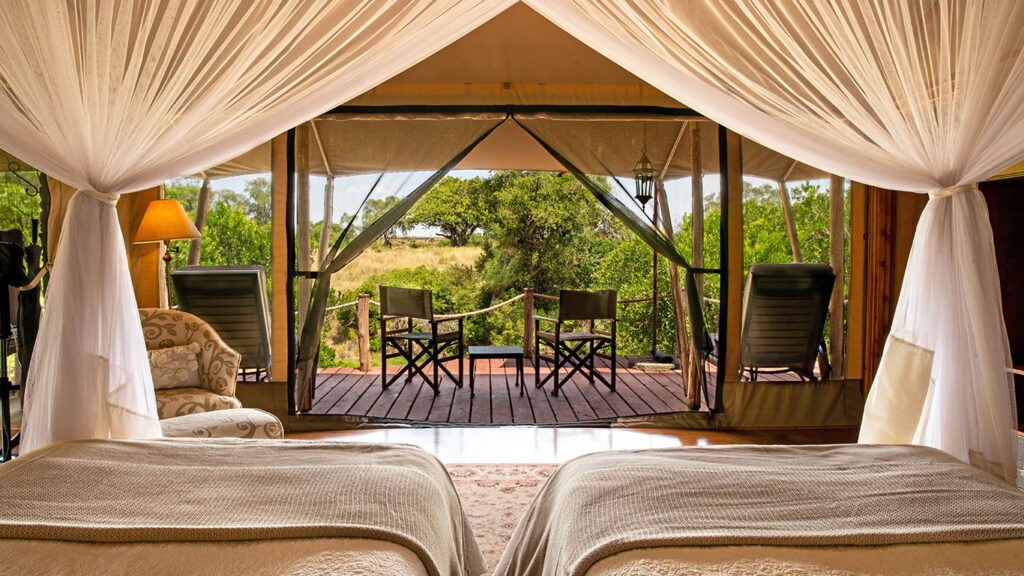
The design at Sand River draws explicitly from the 1920s safari era. Canvas tents contain polished timber flooring, four-poster beds and freestanding bathtubs. Private verandas overlook the plains. Each tent is spacious and carefully appointed. The overall effect is nostalgic rather than contemporary — a deliberate choice. For guests who find the period aesthetic compelling, Sand River delivers it without apology.
Safari Experience
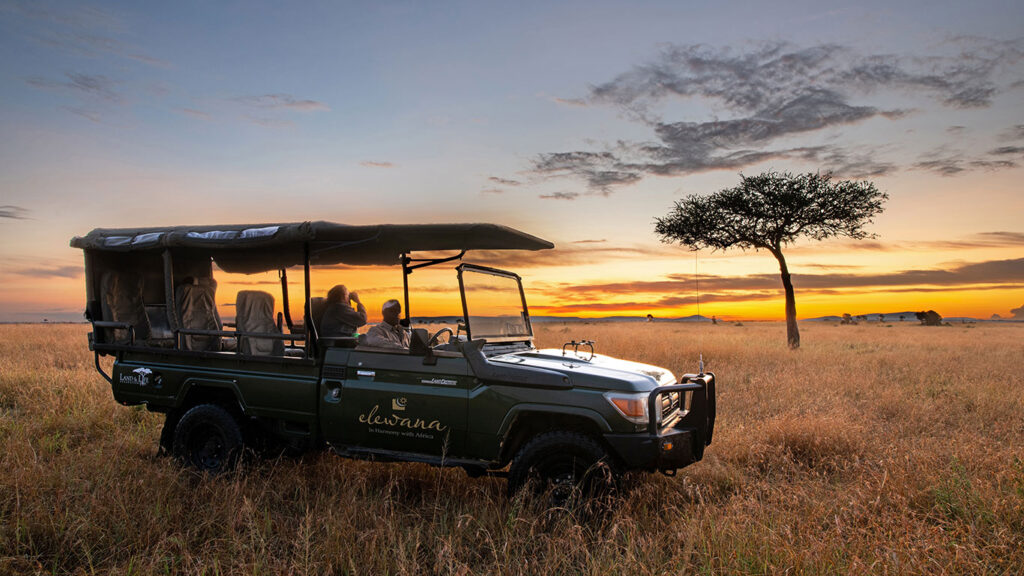
Game drives access the southern Maasai Mara’s prime wildlife corridors. Lion, leopard, cheetah, elephant and buffalo move through in strong numbers throughout the year. Because the camp operates within the main reserve, drives follow designated roads. However, the southern location provides access to quieter game-driving areas than the busier central sections. During migration season, the Sand River crossing areas become active. Consequently, guests often witness wildebeest movements without driving far from camp.
One morning during a stay here, a 6am wake-up call proved unnecessary. A lion had stationed himself on the tent deck before dawn. He roared from twelve feet away. That is the quality of wildlife access the southern Mara delivers when the conditions are right — and at Sand River, they frequently are.
When to Visit
The southern Mara delivers strong wildlife viewing year-round. However, July through October brings the Great Migration. Wildebeest and zebra cross the Sand River as they move north from the Serengeti. The southern entry point means the herds arrive here first in the season. December through March brings dry conditions and excellent predator sightings. Additionally, April and May offer lush green landscapes and lower visitor numbers.
Combining Sand River with Other Kenya Destinations
Sand River works well as part of a wider Kenya circuit. Laikipia to the north offers highland terrain and rhino. Samburu adds the frontier ecosystem and the Samburu Special Five. Furthermore, the Kenya coast closes a journey naturally at the Indian Ocean.
For Kenya planning: Kenya Safari Guide
For Masai Mara lodges: Masai Mara Safari Lodges
For all Kenya regions: Luxury Kenya Safari Lodges
If you are considering Sand River Masai Mara as part of a Kenya safari, we would be pleased to begin with a conversation.
Elewana Collection — elewana.com
Kenya Wildlife Service — kws.go.ke
The Oloi Selects view of Sand River Masai Mara
Sand River Masai Mara is an Elewana camp inside the Masai Mara National Reserve, on the Sand River close to the Tanzanian border.
At a glance
- 16 tented accommodations, including one family tent
- Divided into two separate but adjoining campsites, each with its own dining and public areas
- Inside the Masai Mara National Reserve, on the banks of the Sand River
- Most guests fly from Nairobi to a nearby Mara airstrip and take a short transfer
Who it suits
Travellers who want a camp in the Reserve itself, near the Tanzanian border, with resident lion, leopard and cheetah and the migration from roughly July to October.
Who it does not suit
Guests who want a very small camp, or exclusive vehicle use as standard.
Its place in a route
It suits a Mara stay of three or four nights, paired with a conservancy camp for a quieter second leg.
Families
There is one family tent. We confirm this in your quote.
Getting there
The camp’s page does not name the airstrip. We confirm this in your quote.
What the rate usually excludes
Park fees and flights. We confirm this in your quote.
What we would choose instead
For a camp on a higher vantage point, we look at Angama Mara.
Last checked against the property’s own information: October 2026. Details change, so we confirm them again when we quote your itinerary.