
Saruni Samburu
Kalama Conservancy, Samburu — northern Kenya
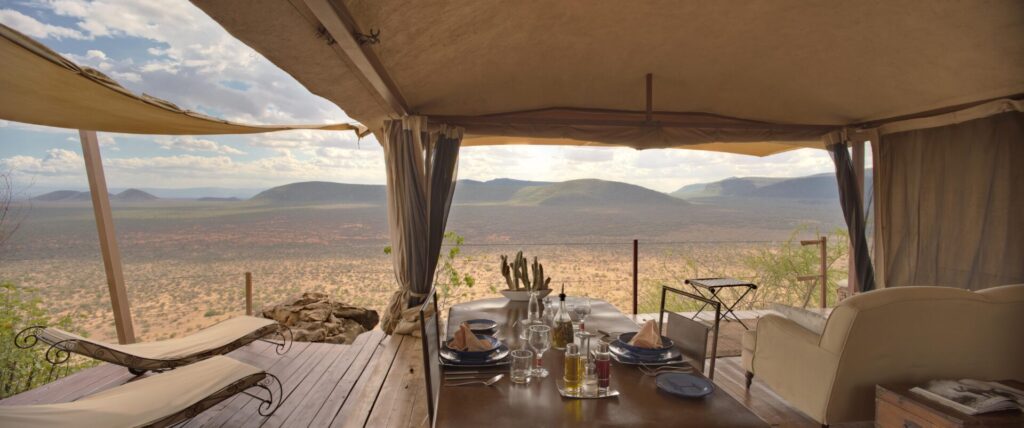
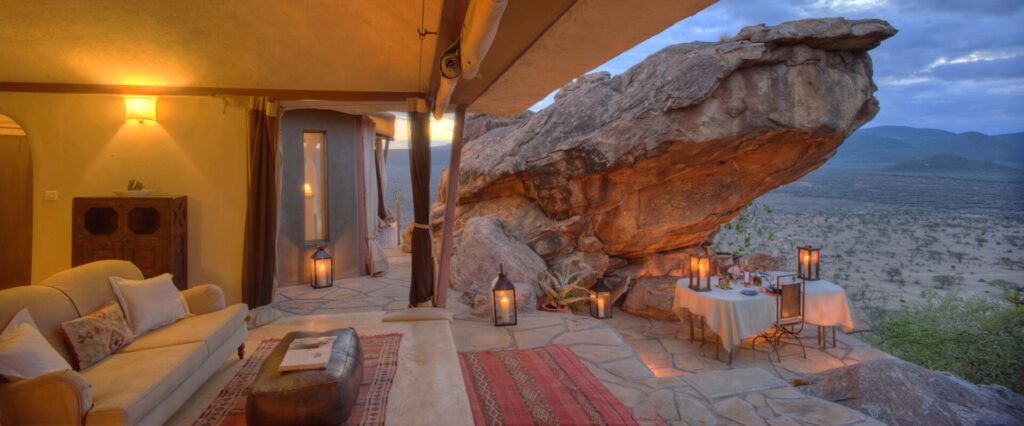
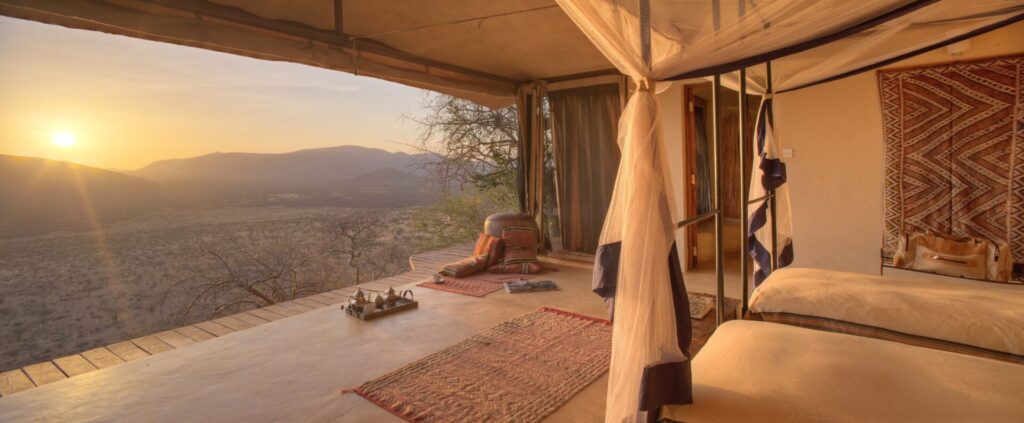
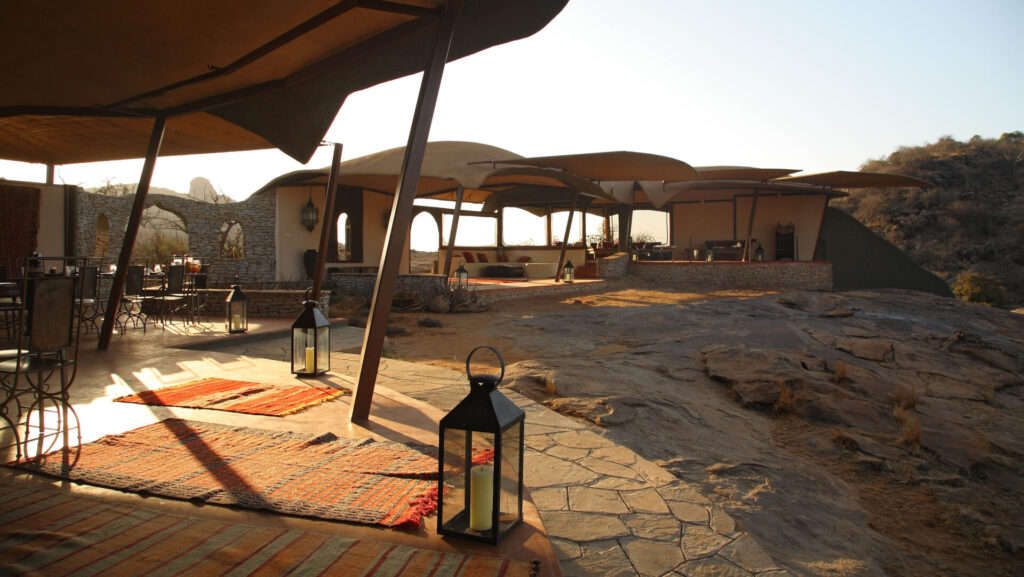
Saruni Samburu is built into the granite outcrops of Kalama Conservancy in northern Kenya. The conservancy is community-owned and managed in partnership with the Samburu people. From villas positioned among the rocks, dry river valleys stretch below. Acacia plains and distant mountain ranges extend to every horizon. Additionally, the elevated position gives one of the most panoramic viewpoints in the Samburu ecosystem.
Kalama Conservancy forms a conservation buffer for Samburu National Reserve. However, it is more than a buffer. Tourism here directly supports the Samburu community that owns and manages the land. Consequently, cultural visits have a depth that managed tourism programmes elsewhere rarely achieve. Visitor numbers are deliberately low. Furthermore, this keeps both the wildlife experience and the cultural relationship genuine.
Location and Landscape
The granite hills that define Kalama’s terrain are ancient. They create a landscape that differs visually from the river valley settings lower in the ecosystem. Northern Kenya is defined by dry riverbeds, acacia scrub and wide desert plains. Sunsets across the conservancy are particularly striking as the light fades across the rocky hills. Additionally, sunrise reveals the full scale of the landscape below. The Samburu Special Five often move through the plains in the early morning light.
Accommodation
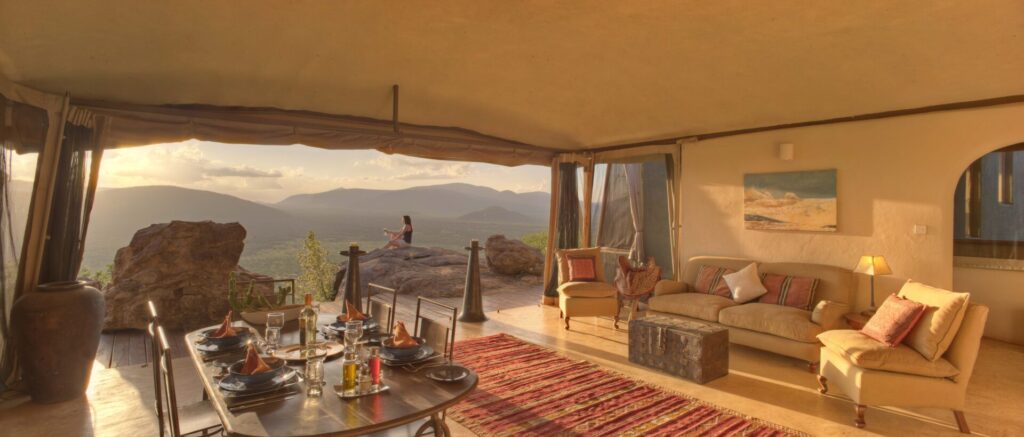
Villas sit among the granite rocks, individually positioned to maximise privacy. Each has large open terraces overlooking the conservancy. Natural stone and canvas construction blends into the hillside. Bedrooms and sitting areas are spacious and well-appointed. The elevated design ensures every room has uninterrupted views across Kalama. For guests who prefer altitude and stone to valley and water, Saruni Samburu offers a distinct alternative within the northern Kenya circuit.
Safari Experience
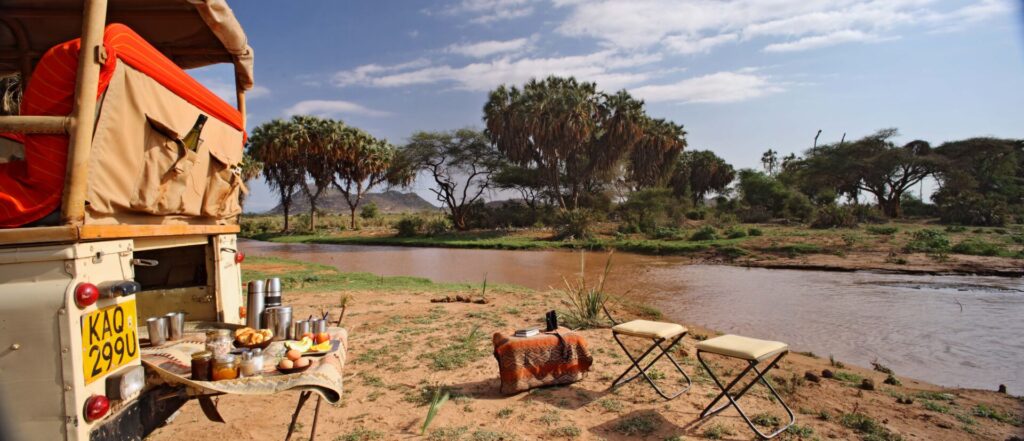
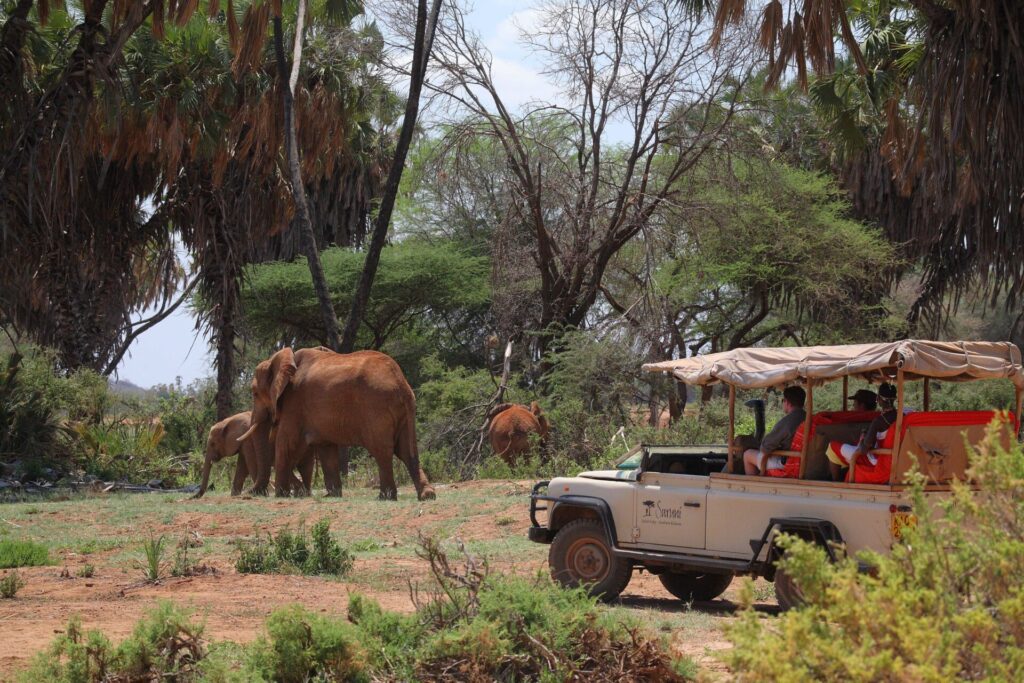
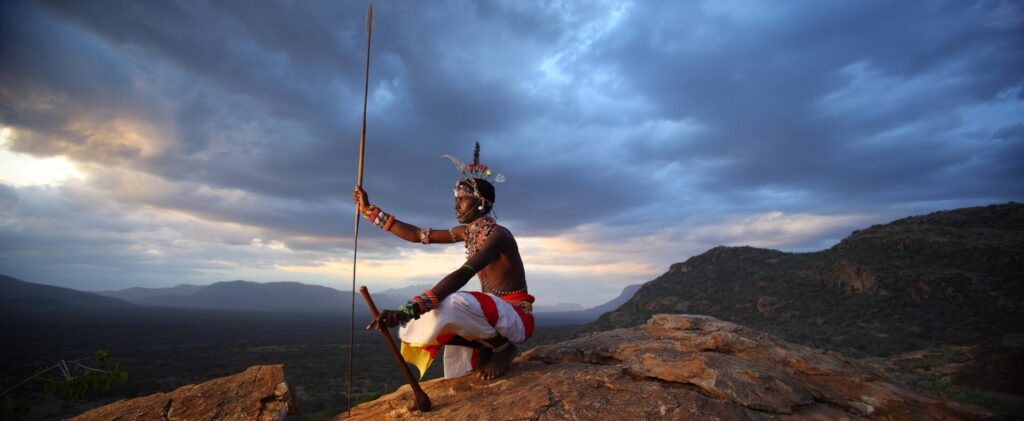
Game drives access both Kalama Conservancy and Samburu National Reserve. Because Kalama has far fewer vehicles than the reserve, sightings carry a quality of calm. Night drives run within the conservancy after dark. Walking safaris move through the granite terrain with Samburu trackers. Additionally, cultural visits to Samburu communities carry more weight here than elsewhere — the community owns the land and directly receives the economic benefit of tourism. That relationship changes the quality of the interaction considerably.
Wildlife
The Samburu ecosystem supports species not found in southern Kenya. Grevy’s zebra, reticulated giraffe, gerenuk, Beisa oryx and Somali ostrich are specific to this northern terrain. Furthermore, elephant, lion and leopard are all present across the conservancy and reserve. The open, semi-arid landscape means sightings often unfold against wide desert horizons — a visual register entirely different from the Mara or Amboseli.
When to Visit
Saruni Samburu is accessible year-round. However, June through October is the most comfortable season. Temperatures are lower during this period and wildlife viewing is at its best. The midday heat of April, May and November can be intense. Additionally, December through March offers clear conditions and warm but manageable temperatures. For walking safaris and longer time in the field, the cooler months reward the most.
Combining Saruni Samburu with Other Kenya Destinations
Saruni Samburu works naturally within a northern Kenya circuit. Sasaab or Elephant Bedroom Camp offer alternative Samburu atmospheres and design languages. Additionally, Laikipia to the south gives highland terrain and rhino. The Masai Mara provides contrasting open grassland wildlife further south. Furthermore, the Kenya coast closes a journey naturally at the Indian Ocean — Lamu in particular connects culturally with the Samburu and Swahili traditions of the north.
For Kenya planning: Kenya Safari Guide
For Samburu lodges: Samburu Safari Lodges
For all Kenya regions: Luxury Kenya Safari Lodges
If you are considering Saruni Samburu as part of a Kenya safari, we would be pleased to begin with a conversation.
Saruni — saruni.com
Kenya Wildlife Service — kws.go.ke