
Sasaab
Ewaso Nyiro River, Samburu — northern Kenya
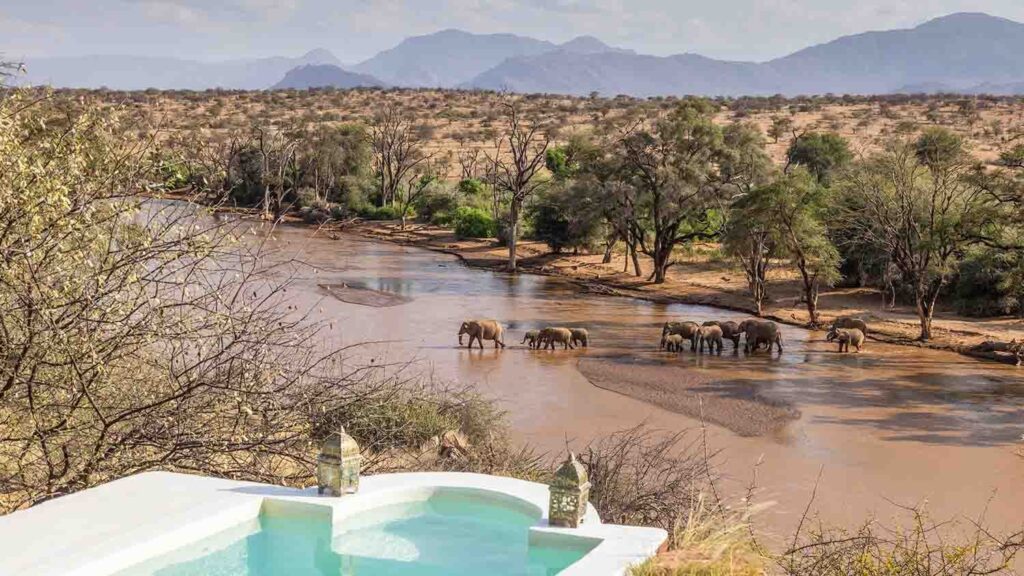
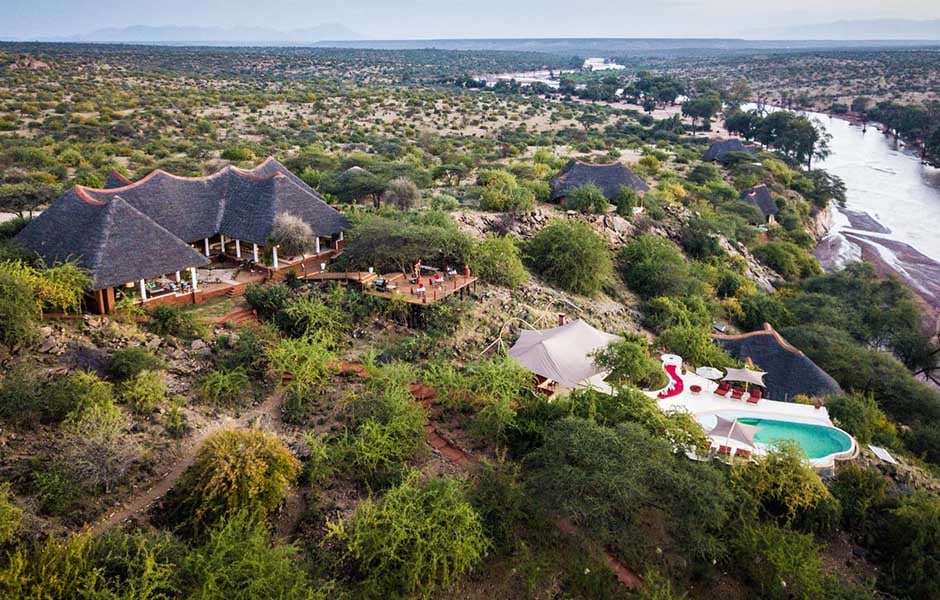
Sasaab sits on a ridge above the Ewaso Nyiro River in northern Kenya. The architecture is unusual for the safari circuit. Whitewashed domes, open courtyards and wide terraces reflect a Swahili and Moroccan design vocabulary. From the ridge-top position, a vast semi-desert valley stretches below. Scattered doum palms and rocky hills frame the view in every direction.
Its location places the lodge close to Samburu National Reserve. However, it feels removed from the busier safari circuits further south. The Ewaso Nyiro River is what makes this ecosystem function. Even in the driest months, wildlife gathers along its banks. Consequently, the river acts as a narrow ribbon of green through otherwise arid terrain.
Location and Landscape
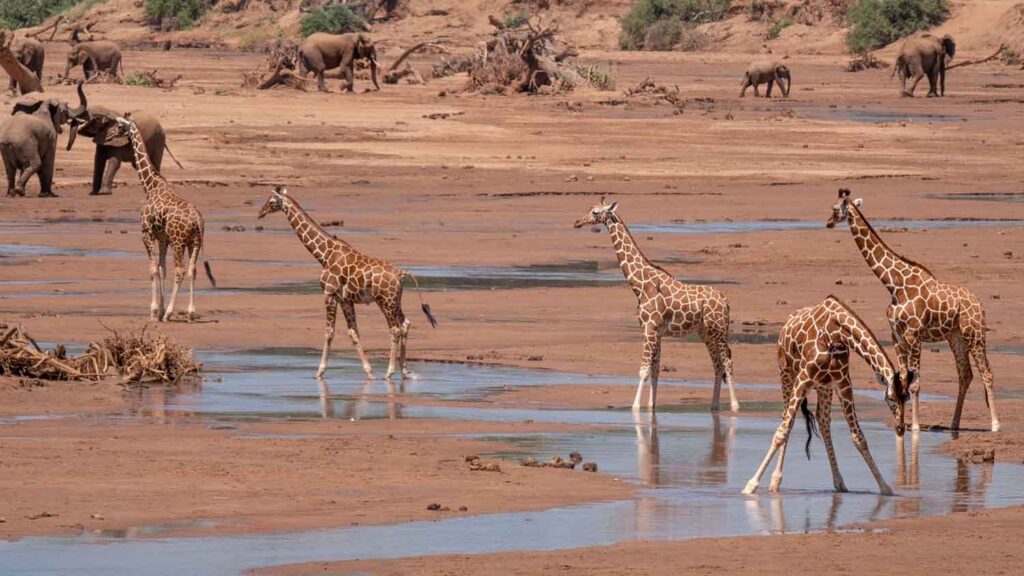
Samburu is strikingly different from the Mara or Amboseli. Dry riverbeds, acacia scrub, rocky ridges and wide desert plains define the terrain. Additionally, the wildlife here includes species not found in southern Kenya. The Samburu Special Five are specific to this northern ecosystem. Grevy’s zebra, reticulated giraffe, gerenuk, Beisa oryx and Somali ostrich all move through the reserve and surrounding landscape. Furthermore, elephant gather along the river and lion and leopard are present within the reserve.
Accommodation
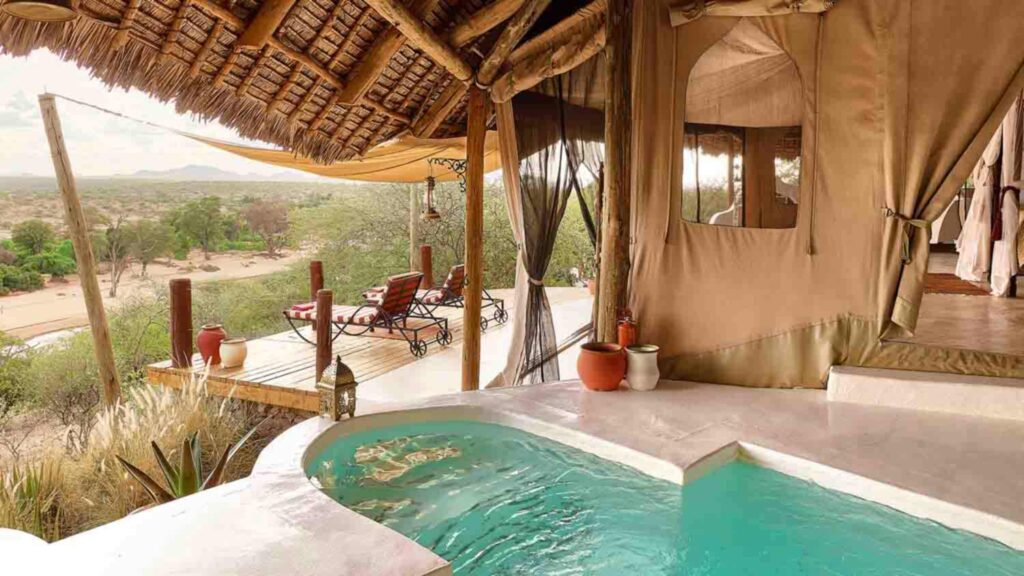
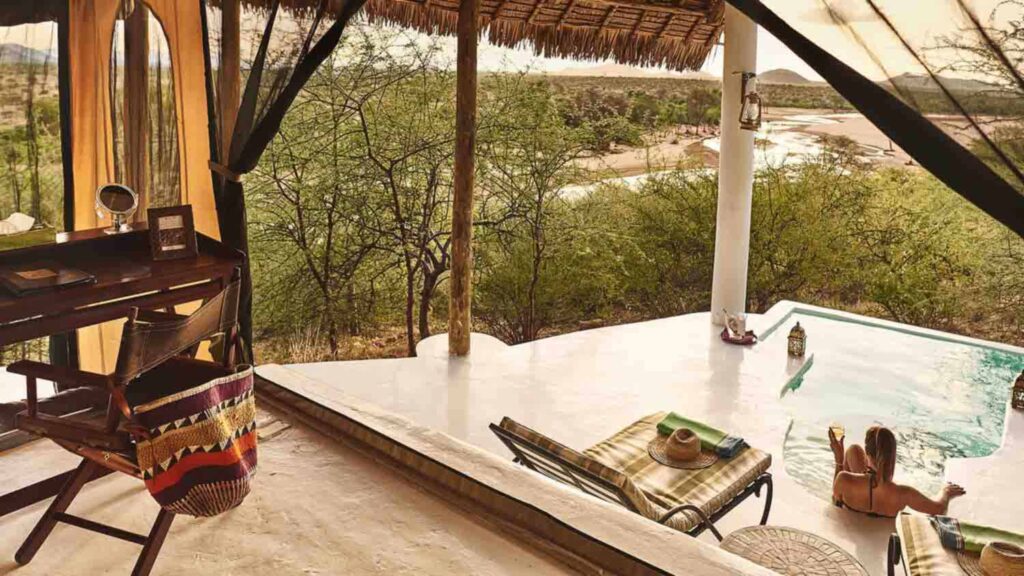
Sasaab has a small number of suites built along the ridge. Each maintains privacy and uninterrupted views across the valley. Large open bedrooms flow onto expansive terraces. Private plunge pools overlook the desert below. Outdoor bathrooms are part of the suite design — in the Samburu heat and open air, this feels entirely appropriate rather than inconvenient. Canvas and stone construction keeps the interiors cool. Additionally, the lodge retains a strong sense of seclusion even at full occupancy.
At sunset, the entire valley turns deep amber under the northern Kenya light. The terrace at that hour is one of the most distinctive atmospheric experiences of any lodge in Kenya.
Safari Experience
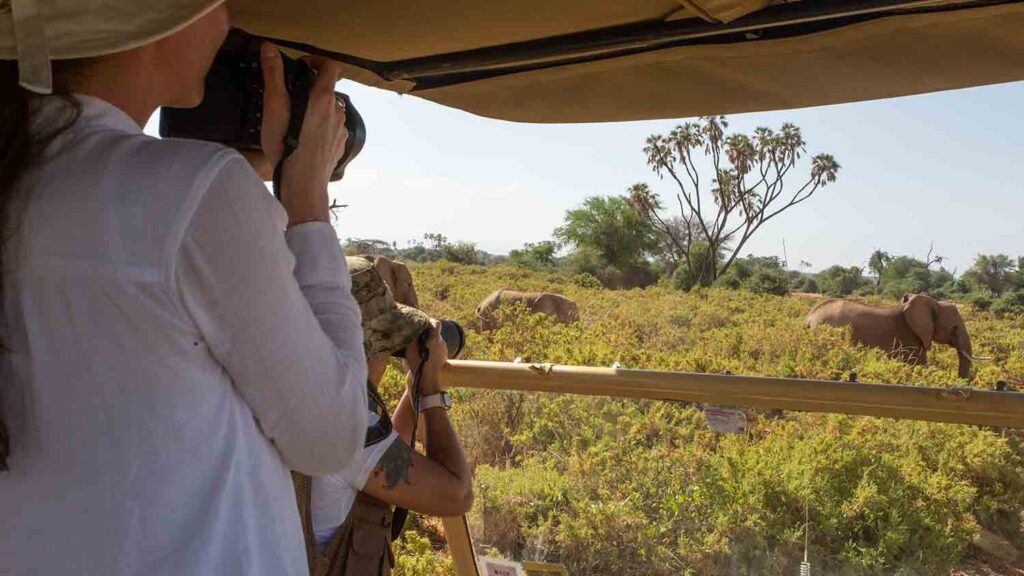
Game drives access Samburu National Reserve’s dry riverine forest and open plains. Early morning drives along the river are particularly productive for leopard. Because leopard use the riverine woodland as cover, the low golden light at dawn creates the best conditions for sightings. Camel walks with Samburu guides offer one of the most authentic ways to move through this landscape — a tradition the community has practised for generations.
However, the activity that reveals northern Kenya’s full scale is the helicopter flight. From the air, lava fields, sand rivers and ancient mountains extend far beyond the reserve boundary. Few travellers ever see this terrain. Furthermore, cultural visits to Samburu communities give context for the camel traditions and the people’s longstanding relationship with this arid landscape.
When to Visit
Samburu is accessible year-round. However, June through October offers cooler temperatures and excellent wildlife viewing. Wildlife concentrates near the river during this dry season period. January through March is another strong period with clear skies and warm days. Additionally, temperatures in Samburu run warmer than in the south — pack for full desert heat in the afternoons and cool mornings on game drives.
Combining Sasaab with Other Kenya Destinations
Sasaab works naturally within a northern Kenya circuit. Saruni Samburu or Elephant Bedroom Camp offer alternative Samburu atmospheres and styles. Additionally, Laikipia to the south adds highland terrain and rhino to the itinerary. The Masai Mara provides open grassland wildlife further south. Furthermore, the Kenya coast — Lamu in particular — closes a northern Kenya journey naturally with a historic Swahili island that connects architecturally to Sasaab’s own design language.
For Kenya planning: Kenya Safari Guide
For Samburu lodges: Samburu Safari Lodges
For all Kenya regions: Luxury Kenya Safari Lodges
If you are considering Sasaab as part of a Kenya safari, we would be pleased to begin with a conversation.
Sasaab — sasaab.com
Kenya Wildlife Service — kws.go.ke