
Zimbabwe Safari Guide | Regions, Seasons and Planning | Oloi Shorua
Zimbabwe Safari Guide
Regions, seasons, cost and planning — a considered overview
Zimbabwe trains its professional guides through what is widely regarded as the most rigorous licensing process on the continent — a multi-year apprenticeship that can include an armed walking test in the presence of dangerous game, examined by senior guides who have themselves passed the same standard decades earlier. The country’s safari reputation rests substantially on this depth of fieldcraft, built up over a period when, for political and economic reasons, far fewer travellers visited than the wildlife and guiding talent warranted.
This Zimbabwe safari guide sets out the regions, seasonal logic and planning considerations behind a well-built Zimbabwe journey, with particular attention to where the country’s guiding tradition and lower visitor numbers combine to best effect.
For broader regional context, see our Safari Guide — Africa, or compare with neighbouring Zambia Safari Guide and Botswana Safari Guide.
Why Travel to Zimbabwe
Zimbabwe combines two qualities that rarely coexist elsewhere: genuinely exceptional wildlife density in certain regions, and visitor numbers that remain comparatively low relative to that density. Hwange holds one of the largest elephant populations on the continent, yet its size means crowding is rarely an issue outside a handful of well-known waterholes. Mana Pools, a UNESCO World Heritage Site, permits unguided walking in specific zones — a freedom almost unheard of in African national parks, reflecting both the confidence in the park’s ecology and a regulatory tradition that trusts experienced travellers to use it responsibly.
The guiding standard itself is a genuine differentiator. A Zimbabwean professional guide who has passed the full licensing process brings a depth of bush knowledge — bird calls, spoor identification, plant ecology, dangerous game behaviour — that shapes the quality of a safari as much as the wildlife itself.
Main Safari Regions
Hwange National Park
Hwange is Zimbabwe’s largest national park and one of its most reliable for sheer density of sightings, built around a network of pumped waterholes that draw wildlife consistently through the dry season. Elephant herds here can run into the hundreds at a single waterhole during peak dry months, and the park supports strong populations of lion, including several well-studied prides that have featured in long-running research projects.
Hwange’s size — close to 15,000 square kilometres — means experience varies considerably by camp location. The areas bordering private concessions in the north tend to offer more exclusive game viewing, while the main public camps see higher vehicle numbers, particularly around the most productive waterholes in peak season.
Mana Pools National Park
Mana Pools sits along the Zambezi River across from Zambia’s Lower Zambezi, sharing the same floodplain ecosystem but carrying its own distinct character — open, parkland-like terrain studded with ancient albida trees, beneath which elephant browse in a setting that has become one of the most photographed in African safari literature. The park’s UNESCO status reflects both its ecological significance and the unusual freedom it grants: walking without an armed guide is legally permitted in designated areas, though in practice most visitors choose to walk with a licensed professional given the density of dangerous game.
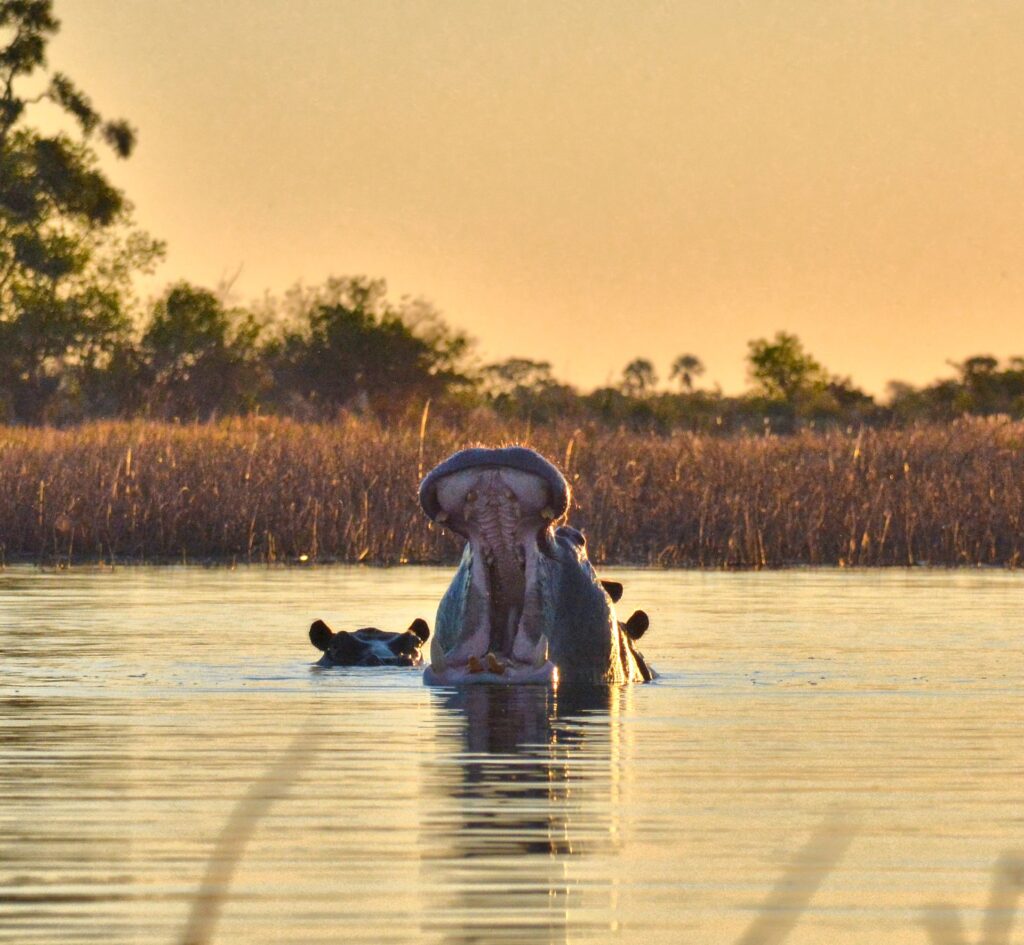
Canoe safaris along the Zambezi are a defining Mana Pools activity, offering close encounters with hippo, crocodile and elephant from water level. The park’s relative inaccessibility — light aircraft or a long road transfer from Harare — keeps visitor numbers genuinely low even during peak season.
Matobo National Park
South of Bulawayo, Matobo presents an entirely different landscape — vast granite kopjes and balancing boulder formations shaped over two billion years, set within a national park that also holds one of Zimbabwe’s most successful black and white rhino populations. Game viewing here happens substantially on foot and by vehicle in combination, with rhino tracking on foot a particular specialism of the park’s guiding teams.
Matobo also carries significant cultural and historical weight, including San rock art sites dating back thousands of years and the grave of Cecil Rhodes at World’s View. For travellers building a Zimbabwe itinerary around more than wildlife alone, Matobo adds a dimension the bush parks alone cannot provide.
Victoria Falls
On Zimbabwe’s western border, Victoria Falls remains one of the most recognisable natural landmarks on the continent, and the Zimbabwean side offers the more expansive, frontal views of the falls compared to the Zambian side. Beyond the falls themselves, the town supports white-water rafting, helicopter flights over the gorge, and sundowner cruises on the upper Zambezi, making it a practical and atmospheric bookend for a wider Zimbabwe or regional itinerary.
Matusadona and Lake Kariba
On the southern shore of Lake Kariba, one of the largest artificial lakes in the world, Matusadona National Park combines lakeshore game viewing with a quieter, less developed safari infrastructure than Hwange or Mana Pools. Houseboat-based exploration of the lake itself is a distinctive regional activity, and the park’s elephant and buffalo populations draw down to the shoreline in numbers that reward patience over the course of a multi-day stay.
Gonarezhou National Park
In Zimbabwe’s remote southeast, Gonarezhou — meaning “place of elephants” in Shona — is part of the Great Limpopo Transfrontier Park alongside South Africa’s Kruger and Mozambique’s Limpopo National Park. Sandstone cliffs along the Save and Runde rivers create a dramatic backdrop, and the park’s near-total absence of visitors makes it one of the more deliberate additions for travellers seeking genuine remoteness rather than convenience.
Wildlife Highlights
- Elephant: Hwange and Mana Pools both hold substantial populations, with Mana Pools’ albida woodland producing some of the continent’s most recognisable elephant imagery.
- Lion: Hwange’s well-studied prides have been the subject of long-running research, offering guides unusually detailed knowledge of individual animals and pride dynamics.
- Rhino: Matobo holds one of Zimbabwe’s most successful black and white rhino populations, with tracking conducted substantially on foot.
- Painted dog: Hwange supports a significant population of African painted dog, also known as wild dog, with several long-term conservation projects based in the park.
- Hippo and crocodile: the Zambezi River through Mana Pools holds dense populations, best appreciated from a canoe.
Best Time to Visit Zimbabwe
Zimbabwe’s seasons follow the broader regional pattern, though this Zimbabwe safari guide treats timing in relation to activity as much as wildlife density — walking, canoeing and waterhole-based viewing each peak at slightly different points.
July to October
The dry season and the peak of game viewing across Hwange and Mana Pools, as wildlife concentrates around permanent water and pumped waterholes. October can be intensely hot, particularly in the lower-lying Zambezi valley, though wildlife concentration reaches its annual peak.
November to March
The wet, green season. Many camps in Mana Pools and parts of Hwange close or operate on reduced schedules, and the bush becomes considerably harder to see through. This period suits birdlife and a quieter, lusher version of the parks that remain open, with Victoria Falls also at its most dramatic given higher water flow.
April to June
A transitional period as the rains end and the bush dries out gradually. Temperatures remain comfortable, vegetation is still relatively green, and visitor numbers stay lower than the peak July to October window — a period often favoured by returning travellers who know the parks well.
Different Travel Styles
Walking-Focused Journeys
Mana Pools and Matobo, combined, suit travellers specifically drawn to Zimbabwe’s guiding tradition — multi-day walking in Mana Pools and rhino tracking on foot in Matobo, with vehicle-based activity used to cover ground between key sightings rather than as the primary mode.
Classic Hwange and Falls Combination
Hwange’s elephant and predator density paired with a short Victoria Falls extension forms the most practical introduction to the country, generally over seven to nine nights.
Zambezi River Itineraries
Mana Pools combined with canoe time and a Lake Kariba houseboat stay builds an itinerary organised around the river itself rather than around individual parks — a structure that particularly suits travellers who enjoy water-based activity.
Remote Southeast Extension
Gonarezhou, generally added by experienced Africa travellers seeking genuine isolation, works best as a deliberate extension following a more conventional Zimbabwe or Kruger-area itinerary rather than as a first stop.
Practical Planning Considerations
- Internal travel: light aircraft connect Victoria Falls, Hwange, Mana Pools and Kariba; road transfers between Hwange and Victoria Falls are also common and manageable in duration.
- Walking activity: travellers specifically interested in walking safaris should confirm camp policy and guide qualifications in advance, as standards and activity offerings vary even within the same park.
- Pace: three to four nights per region allows enough time to properly engage with Zimbabwe’s guiding-led activities rather than treating them as a single add-on drive or walk.
- Combining countries: Victoria Falls’ position on the Zambia-Zimbabwe border makes a combined itinerary with Zambia’s Lower Zambezi or South Luangwa straightforward to plan.
Entry Requirements
Most nationalities require a visa to enter Zimbabwe, available online in advance or on arrival at major entry points; a joint Zimbabwe-Zambia KAZA visa is also available for travellers combining both countries around Victoria Falls. A passport valid for at least six months beyond the date of travel is required, along with proof of yellow fever vaccination for travellers arriving from, or having transited through, certain countries. Requirements vary by nationality and are worth confirming directly ahead of travel.