
Elewana Serengeti Pioneer Camp
South-Central Serengeti, Moru Kopjes — Elewana Collection
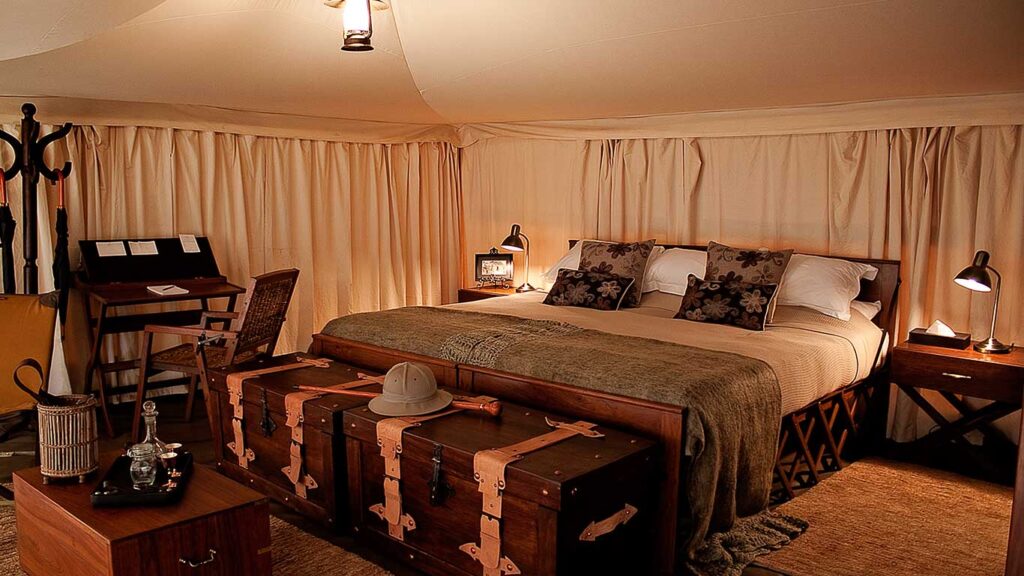
Serengeti Pioneer Camp sits on its own individual kopje in the south-central Serengeti, close to the Moru Kopjes. Views drift across grass plains, savannah woodland and the black clay plains further west. The camp’s design pays deliberate homage to the mobile safari camps of the 1930s. It follows a “zero footprint” ethos, furnished with antique trunks, traditional safari chairs and travelling desks alongside modern comforts.
Together with its sister property, Serengeti Migration Camp on the Grumeti River to the north, Elewana’s two camps cover over 90 percent of the Serengeti between them. Both share knowledge of the migration’s position, helping guests reach the herds quickly.
Location and Landscape
The Moru Kopjes area’s volcanic-formed terrain varies from open grass plains to scattered acacia woodland. As a result, the surrounding landscape offers genuine variety within a single game-viewing radius. The southern Serengeti’s calving season runs from January to March. During this window, roughly 400,000 calves are born within a few concentrated weeks, drawing predators and scavengers into one of the most intense wildlife windows in the park. Once the herds move on, however, the area continues to support strong year-round Big Five sightings.
Accommodation
The camp comprises twelve tented rooms, each with en-suite facilities including a flushing toilet, vanity basin and shower. Interiors lean into the camp’s 1930s safari theme. Antique-style furnishings pair with practical modern fittings, including old-fashioned copper-style showers. A dining tent hosts breakfast and dinner, while lunch is typically taken in camp or out in the bush on full-day game drives.
Safari Experience
Day-long game drives form the camp’s primary activity, often paired with a champagne picnic breakfast and bush lunch. These take advantage of the area’s strong Big Five sightings and the calving season’s concentrated predator action. The camp also holds special permission from park authorities to use a private picnic site atop a nearby hill, offering uninterrupted views over the plains. Hot air balloon safaris, in addition, can be arranged at additional cost and must be booked in advance.
When to Visit
January through March brings the wildebeest calving season directly to the surrounding southern Serengeti plains, the camp’s signature wildlife window. Outside this period, however, the area continues to offer strong year-round Big Five viewing. Resident wildlife sustains good game drives independent of the migration’s exact position.
Practical Information
The Seronera airstrip serves the camp, a roughly one-hour flight from Arusha followed by a 50-minute drive to camp. Multiple scheduled flight operators, in fact, serve the route daily from Arusha.
Combining Serengeti Pioneer Camp with Other Tanzania Destinations
Pioneer Camp pairs naturally with Elewana’s Serengeti Migration Camp on the Grumeti River. Together, the two properties cover most of the park’s migration range across the year. Ngorongoro Crater and Tarangire, similarly, both extend into a wider northern Tanzania circuit, and Zanzibar offers a coastal close to the journey.
Our Tanzania Safari Guide covers wider planning. For nearby options, see Serengeti Safari Lodges. For the full country collection, visit Luxury Tanzania Safari Lodges.
If you are considering Serengeti Pioneer Camp as part of a Tanzania safari, we would be pleased to begin with a conversation.