
Namiri Plains
Eastern Serengeti — Asilia Africa
Namiri Plains
Eastern Serengeti — Asilia Africa
Namiri Plains sits in the remote eastern Serengeti, along the seasonal Ngare Nanyuki River. The area stayed closed to tourism for twenty years, allowing its cheetah population to recover. “Namiri” translates to “big cat” in Swahili, and the name has held. A hard calcrete layer underlies this stretch of short-grass plain, preventing trees and shrubs from establishing. As a result, the area now holds one of the highest densities of cheetah in East Africa, alongside strong lion and leopard populations.
The camp’s nearest neighbour sits more than an hour’s drive away. This gives Namiri a degree of isolation rare even by Serengeti standards.
Location and Landscape
The calcrete layer beneath Namiri’s plains keeps the grassland permanently short. This suits cheetah hunting technique and gives game drives exceptional visibility across open ground. A permanent underground water source, in addition, sustains resident plains game year-round. This, in turn, keeps the area’s predator population fed and active, independent of the migration’s seasonal movement.
Between October and May, migration herds move through the plains close to camp. They occasionally fill the grassland on their way south to the calving grounds. Outside this window, however, resident lion, cheetah, leopard, hyena, serval and caracal sustain consistently strong game viewing.
Accommodation
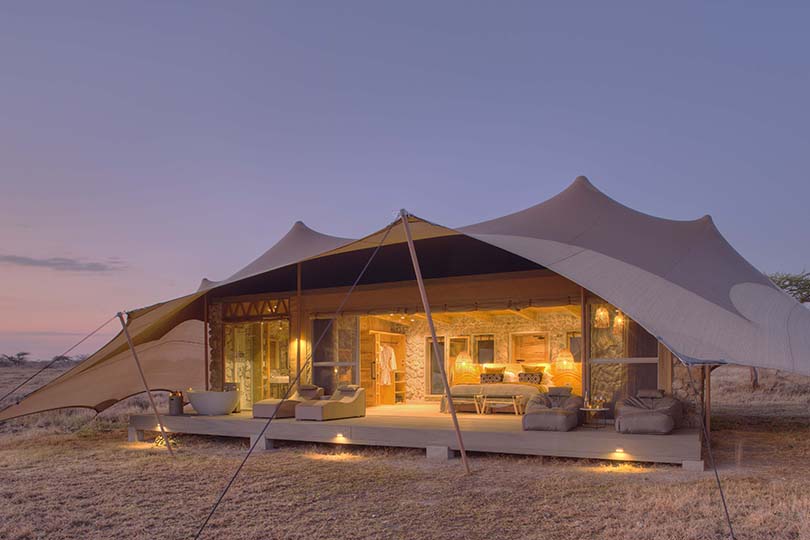
Namiri Plains offers ten tented suites built from local calcrete stone, which helps regulate interior temperature. Sliding doors run the full length of each room, opening onto a private viewing deck. One family tent sleeps up to four, with children under 12 required to share with an adult. A swimming pool, a small spa, and a library focused on the area’s fossil history round out the camp’s facilities.
For travellers wanting greater privacy, two private Retreats sit apart from the main camp. Each includes two en-suite bedrooms, a private outdoor bath and a wraparound veranda. A dedicated private guide, vehicle and chef complete the arrangement.
Safari Experience
Twice-daily game drives explore the surrounding plains in open-sided vehicles fitted with charging points and fridges. Walking safaris, in addition, suit guests wanting a slower, ground-level pace through the same landscape. Namiri is one of the few camps in the Serengeti where guests can spend time with researchers from the Serengeti Cheetah Project, active in the area since the 1970s. This gives visitors direct insight into ongoing conservation work and the area’s cheetah population.
Hot air balloon safaris can be arranged at additional cost. A small library of fossil literature, meanwhile, reflects the area’s significant palaeontological history.
When to Visit
Namiri offers strong year-round game viewing thanks to its permanent water source and resident predator population. Migration herds typically move through the area between October and May. The most concentrated sightings generally fall between November and January, as herds gather before continuing south. February brings drier conditions and excellent photographic light. The long rains from March, by contrast, bring lower rates and noticeably fewer visitors, alongside the chance to witness early calving on extended drives into the southern plains.
Practical Information
Namiri is reached via the Seronera airstrip, generally a flight of around two hours from Arusha. From there, a drive of roughly two hours reaches camp, given its remote position. The camp welcomes children aged 5 and older. Walking safaris, however, carry their own minimum age requirement and must be booked in advance.
Combining Namiri Plains with Other Tanzania Destinations
Namiri’s eastern position pairs naturally with Dunia Camp in central Serengeti, or with one of Asilia’s migration camps further north or south. This lets travellers track the herds across a wider stretch of the ecosystem. Ngorongoro Crater and Tarangire, similarly, both extend into a wider northern Tanzania circuit. Zanzibar, meanwhile, offers a coastal close to the journey.
Our Tanzania Safari Guide covers wider planning. Nearby options, meanwhile, sit within Serengeti Safari Lodges. The full country collection, finally, appears at Luxury Tanzania Safari Lodges.
If you are considering Namiri Plains as part of a Tanzania safari, we would be pleased to begin with a conversation.
The camp’s nearest neighbour sits more than an hour’s drive away, giving Namiri a degree of isolation rare even by Serengeti standards.
Location and Landscape
The calcrete layer beneath Namiri’s plains keeps the grassland permanently short, which suits cheetah hunting technique and gives game drives exceptional visibility across the open ground. A permanent underground water source sustains resident plains game year-round, in turn keeping the area’s predator population fed and active independent of the migration’s seasonal movement.
Between October and May, migration herds move through the plains close to camp, occasionally filling the grassland on their way south to the calving grounds. Outside this window, resident lion, cheetah, leopard, hyena, serval and caracal sustain consistently strong game viewing.
Accommodation
Namiri Plains offers ten tented suites built from local calcrete stone, which helps regulate interior temperature, with sliding doors running the full length of each room opening onto a private viewing deck. One family tent sleeps up to four, with children under 12 required to share with an adult. A swimming pool, a small spa, and a library with a focus on the area’s fossil history round out the camp’s facilities.
For travellers wanting greater privacy, two private Retreats sit apart from the main camp, each with two en-suite bedrooms, a private outdoor bath, a wraparound veranda, and a dedicated private guide, vehicle and chef.
Safari Experience
Twice-daily game drives explore the surrounding plains in open-sided vehicles fitted with charging points and fridges, and walking safaris are available for guests wanting a slower, ground-level pace through the same landscape. Namiri is one of the few camps in the Serengeti where guests can spend time with researchers from the Serengeti Cheetah Project, active in the area since the 1970s, learning directly about ongoing conservation work and the area’s cheetah population.
Hot air balloon safaris can be arranged at additional cost, and a small library of fossil literature reflects the area’s significant palaeontological history.
When to Visit
Namiri offers strong year-round game viewing thanks to its permanent water source and resident predator population. Migration herds typically move through the area between October and May, with the most concentrated sightings generally falling between November and January as the herds gather before continuing south. February brings drier conditions and excellent photographic light, while the long rains from March bring lower rates and noticeably fewer visitors, alongside the chance to witness early calving on extended drives into the southern plains.
Practical Information
Namiri is reached via the Seronera airstrip, generally a flight of around two hours from Arusha, followed by a drive of roughly two hours to camp given its remote position. The camp welcomes children aged 5 and older; walking safaris carry their own minimum age requirement and must be booked in advance.
Combining Namiri Plains with Other Tanzania Destinations
Namiri’s eastern position pairs naturally with Dunia Camp in central Serengeti, or with one of Asilia’s migration camps further north or south for travellers wanting to track the herds across a wider stretch of the ecosystem. Ngorongoro Crater and Tarangire both extend into a wider northern Tanzania circuit, and Zanzibar offers a coastal close to the journey.
For Tanzania planning: Tanzania Safari Guide
For Serengeti lodges: Serengeti Safari Lodges
For all Tanzania regions: Luxury Tanzania Safari Lodges
If you are considering Namiri Plains as part of a Tanzania safari, we would be pleased to begin with a conversation.