
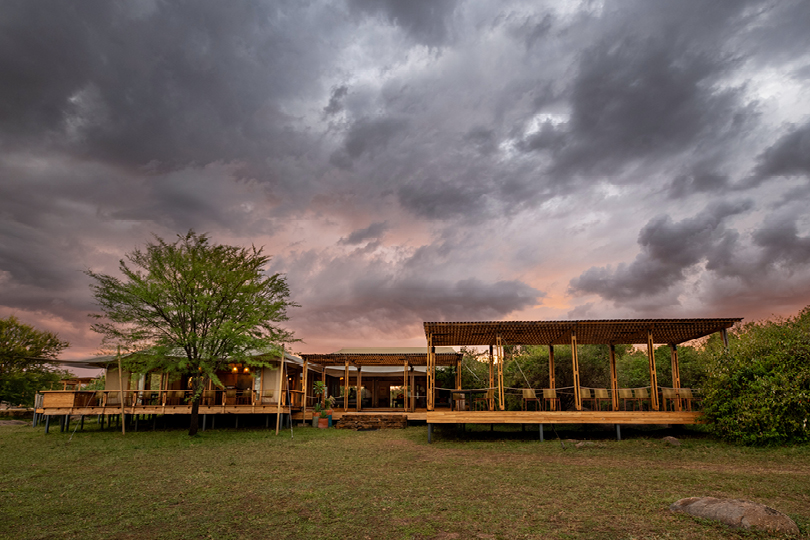
Sayari Camp, Serengeti
Northern Serengeti, Mara River — Asilia Africa
Sayari Camp sits in the far northern Serengeti, a 20-minute drive from the Kogatende airstrip. Several crossing points along the Mara River sit within close reach. As Asilia’s original flagship property, the camp first opened the area to tourism in 2005. It still offers some of the most reliable river-crossing access in the entire ecosystem.
Two wings make up the camp, holding nine and six suites respectively, each with its own dining and lounge area. Guests can book either wing exclusively, while the overall camp still keeps an intimate feel.
Location and Landscape
From July to October, the plains around Sayari fill with the migration’s herds. They cross and re-cross the Mara River here, with several crossing points only minutes from camp. Once the herds move south, however, the northern Serengeti settles into a quieter rhythm. A strong resident population of black rhino, lion, leopard and cheetah remains, alongside considerably fewer vehicles than the peak migration months.
The short rains from late October bring a green transformation to the landscape. They also draw migratory birds from Europe and Asia. As a result, the period after the crossings becomes a particularly rewarding stretch for both wildlife and photography.
Accommodation
Sayari’s fifteen suites combine mahogany floors with king or twin beds. Each en-suite bathroom features a walk-in shower and a bathtub positioned to take in the view across the plains. A two-bedroom family suite, connected by a raised walkway, accommodates two adults and up to three children under 16. Two private Retreats, meanwhile, offer a more exclusive alternative, each with a private guide, vehicle, host and chef.
Natural rock formations frame a rim-flow infinity pool at the heart of camp. A library and information centre, in addition, explores the culture of the local Kuria tribe. The Serengeti’s first solar-powered microbrewery completes the camp’s facilities.
Safari Experience
Twice-daily game drives in custom-modified 4×4 vehicles cover the surrounding plains and river crossing points. Guests aged 12 and older can also join walking safaris. Hot air balloon safaris remain available too, at additional cost, offering an aerial perspective on the migration during peak season.
The camp’s evolving spa offerings add a further dimension to a stay. Craft beer from the solar-powered microbrewery, alongside an information centre focused on Kuria culture and migration ecology, gives Sayari a slightly more varied set of in-camp activities than many of its Serengeti peers.
When to Visit
July through October brings the river crossings directly within reach of camp, making this the most sought-after window of the year. Crossings can still occur into October, as herds complete their movement north. From November through March, often called the “Connoisseur’s Season” by experienced guides, the northern Serengeti offers near-exclusive access to resident wildlife, including black rhino, with considerably fewer visitors than peak season.
Practical Information
Sayari is reached via the Kogatende airstrip, a 20-minute drive from camp. The camp welcomes children aged 5 and older, and accommodates guests with limited mobility more readily than many Serengeti camps. Walking safaris, however, carry a minimum age requirement of 12 years.
Combining Sayari Camp with Other Tanzania Destinations
Sayari’s northern position pairs naturally with Namiri Plains in the east or Dunia Camp in central Serengeti. This lets travellers cover a wider stretch of the ecosystem within one trip. Ngorongoro Crater and Tarangire, similarly, both extend into a wider northern Tanzania circuit. Zanzibar, meanwhile, offers a coastal close to the journey.
Our Tanzania Safari Guide covers wider planning. Nearby options, meanwhile, sit within Serengeti Safari Lodges. The full country collection, finally, appears at Luxury Tanzania Safari Lodges.
If you are considering Sayari Camp as part of a Tanzania safari, we would be pleased to begin with a conversation.