
Ol Donyo Lodge
Chyulu Hills Conservancy, Kenya — Great Plains Conservation
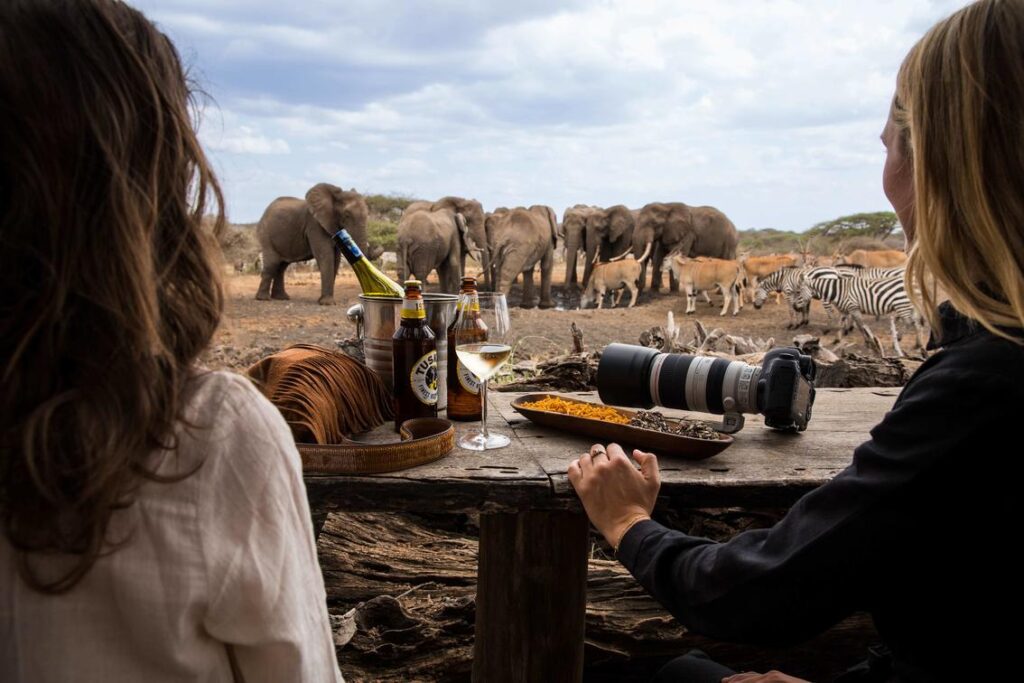
Ol Donyo Lodge sits within the Chyulu Hills Conservancy, between Amboseli National Park and Tsavo West. Great Plains Conservation operates the property across a vast volcanic landscape. The Chyulu Hills rise behind the lodge. Meanwhile, open plains stretch south toward Mount Kilimanjaro.
Few lodges in Kenya occupy this kind of ecological intersection. Wildlife moves freely between Chyulu, Amboseli and Tsavo. Consequently, the game viewing draws from all three ecosystems. Furthermore, private conservancy status allows a range of activities unavailable inside national parks.
Location and Landscape
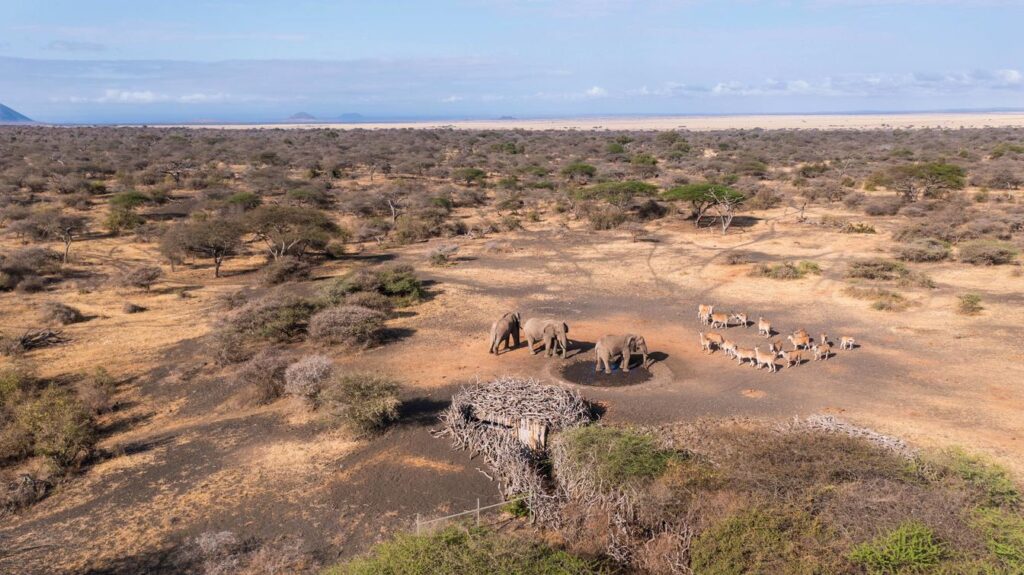
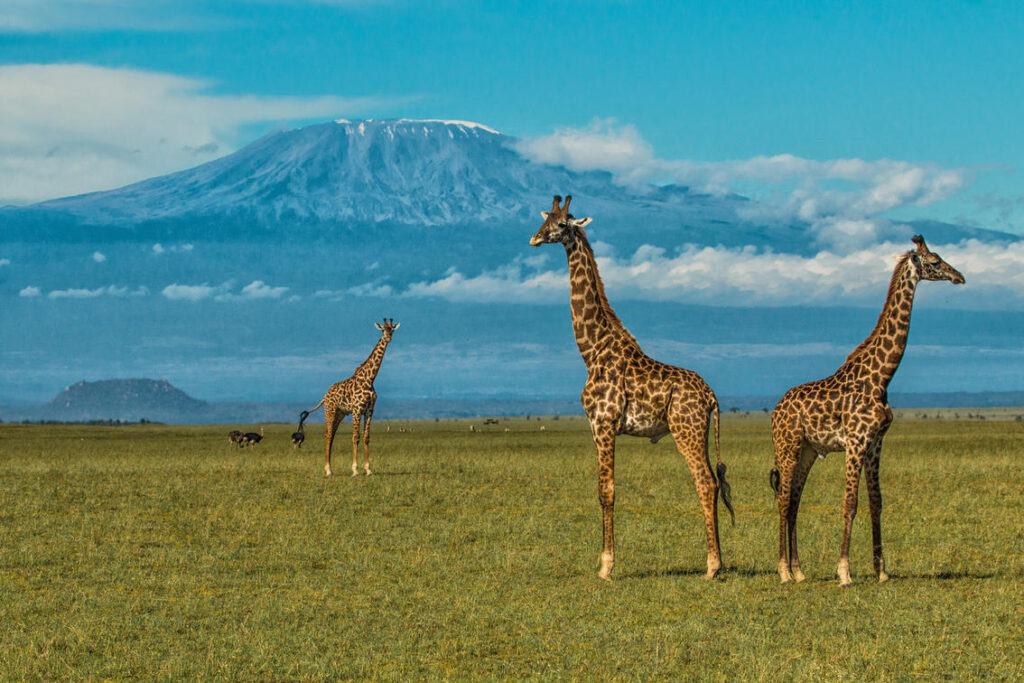
The Chyulu Hills are volcanic in origin. Ancient lava flows and green hills define the terrain behind the lodge. Below, the plains open across the Kilimanjaro corridor toward Tanzania. On clear mornings, the mountain fills the horizon. However, clouds gather around the summit as the day warms. For this reason, early morning is when Kilimanjaro reveals itself most fully.
The conservancy connects directly to the Amboseli and Tsavo ecosystems. Elephant herds move freely across all three areas throughout the year. Additionally, the volcanic terrain supports a different character of landscape from anything in the Mara or Laikipia — open lava plains, green forested hills and wide sky in every direction.
Accommodation
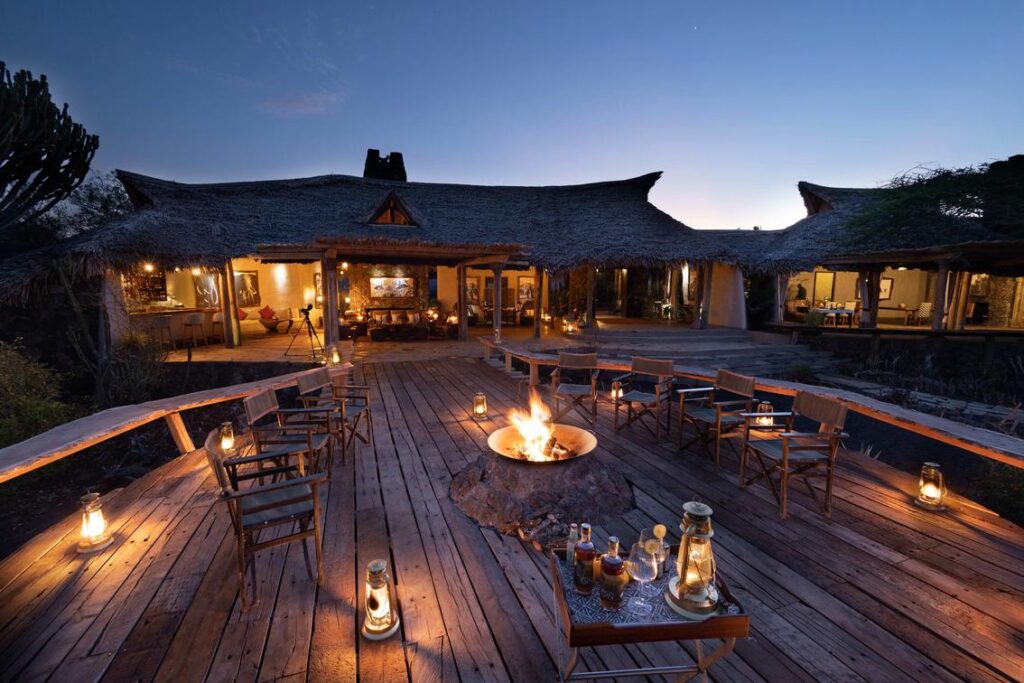
Each suite at Ol Donyo sits widely spaced across the hillside. Private plunge pools overlook the plains. Terraces face the Kilimanjaro landscape and catch the early morning light. Additionally, every suite has a rooftop star bed. This is one of the most distinctive features of any lodge in Kenya. Sleeping on an open rooftop beneath the Chyulu sky changes the relationship between room and night entirely. Without walls or ceiling, the African sky becomes the architecture.
Safari Experience
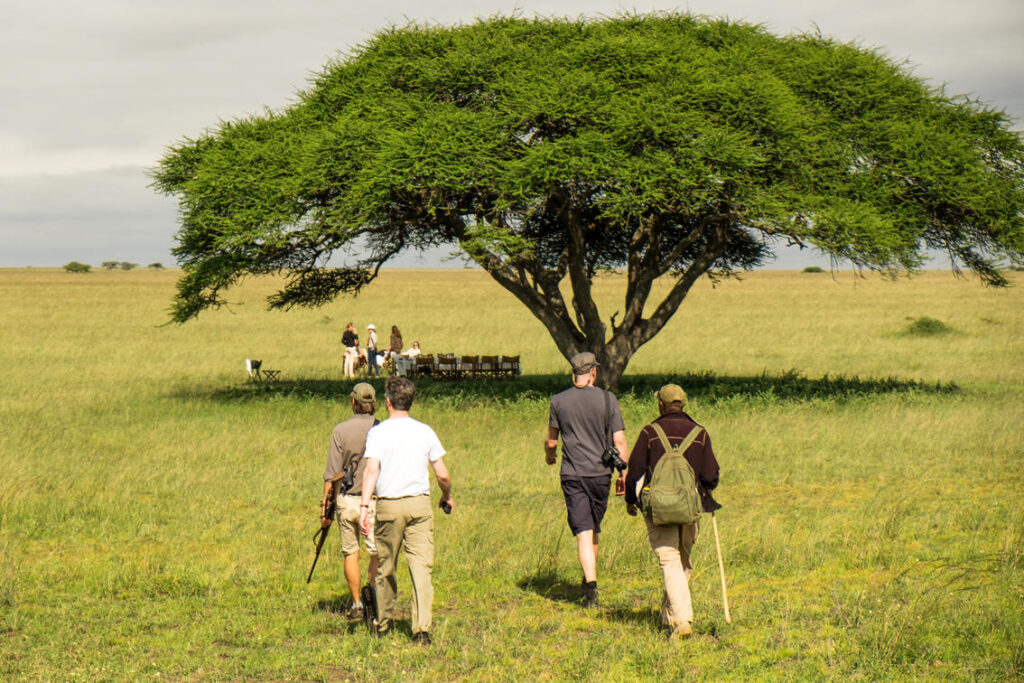
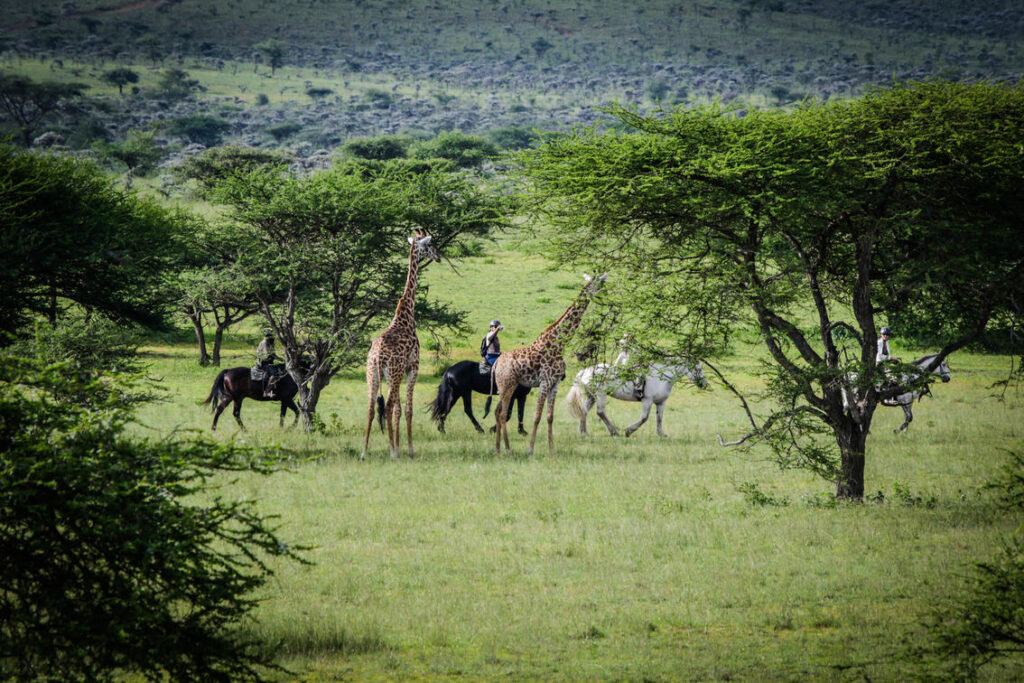
Game drives cover the conservancy’s varied volcanic terrain. Because the land operates privately, guides go off-road and night drives run after dark. Horseback safaris move through open plains where elephant and plains game are active. Walking safaris follow volcanic terrain through lava flows and ancient hills — a landscape that changes character on foot compared with from a vehicle. Additionally, scenic flights over the Chyulu Hills and toward Kilimanjaro give a perspective of the ecosystem’s scale that ground-level travel cannot provide.
Cultural visits to Maasai communities in the surrounding area offer context for how this landscape has been lived in alongside wildlife. The relationship between the Maasai and this terrain is longstanding and adds a human dimension to the conservation story.
When to Visit
Ol Donyo is accessible throughout the year. However, June through October delivers the best general game viewing conditions. Vegetation is lower and wildlife concentrates around water sources during this period. January through March offers consistently clear skies. This is the time for the most reliable Kilimanjaro views at dawn. Additionally, April, May and November bring the green season — lush landscapes and notably lower visitor numbers.
Combining Ol Donyo with Other Kenya Destinations
Ol Donyo works best when combined with Amboseli. Together they reveal two very different sides of the same elephant ecosystem. Amboseli shows elephants on open plains with Kilimanjaro behind them. Ol Donyo reveals the same elephants moving through a volcanic hill landscape. The contrast is sharp and rewarding. Three nights minimum allows the full range of activities to reveal themselves — fewer and the walking, horseback and star bed experiences feel rushed.
Beyond the Chyulu Hills, the Masai Mara adds open grassland wildlife to the north. Furthermore, the Kenya coast — Diani, Watamu or Lamu — closes a journey naturally at the Indian Ocean.
For Kenya planning: Kenya Safari Guide
For Amboseli and Chyulu lodges: Amboseli and Chyulu Hills Safari Lodges
For all Kenya regions: Luxury Kenya Safari Lodges
If you are considering Ol Donyo Lodge as part of a Kenya safari, we would be pleased to begin with a conversation.
Great Plains Conservation — greatplains.com
Kenya Wildlife Service — kws.go.ke