
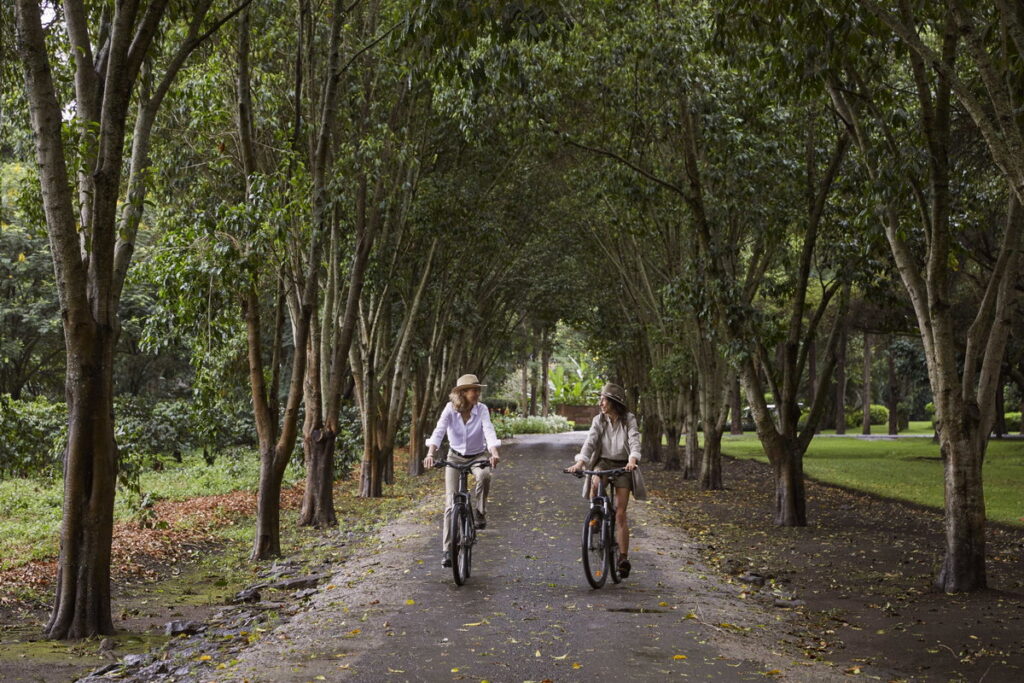
Travelling with Children on Safari
Last checked 15 October 2026.
A safari can be one of the great shared experiences of a family’s life. Children who see an elephant herd at a waterhole rarely forget it. Planning a family journey well comes down to a few things: the right camps, the right pace, and a little extra preparation for health and documents.
Age limits
- Camps and lodges: many welcome children of all ages, while some smaller camps set a minimum age, commonly between 6 and 12. Some have family tents or private houses designed for families.
- Game drives: some camps set a minimum age for shared game drives. A private vehicle removes this concern and lets you set the pace, with breaks whenever the children need them.
- Walking safaris and canoeing: these usually have higher minimum ages, often 12 to 16 depending on the activity and the country.
- Gorilla trekking: the minimum age is 15 in both Rwanda and Uganda. Chimpanzee trekking also has a minimum age, which varies by park.
Choosing where to go
Shorter transfers and fewer camp changes make a family journey more relaxed. Kenya and Tanzania offer short flights between parks and camps with dedicated children’s programmes. South Africa has excellent family lodges, good roads and malaria-free reserves. Mauritius, the Seychelles and Zanzibar pair well with a safari for a few days of beach time at the end.
Health
- Malaria: speak to your doctor about malaria prevention suitable for each child’s age and weight. Some families with young children choose malaria-free reserves, such as those in South Africa’s Eastern Cape, Madikwe and the Waterberg.
- Yellow fever: requirements depend on your route and on each child’s age, and the vaccine is not given to very young infants. See our yellow fever entry requirements, and ask your doctor about a medical exemption certificate where a child cannot be vaccinated.
- Routine vaccines: check that each child’s routine vaccinations are up to date, and ask your travel clinic about any others recommended for your destinations.
- Sun and water: pack high-factor sunscreen, hats and refillable bottles. Camps provide safe drinking water.
Documents
Every child needs their own passport, and visa or travel authorisation rules apply to children as they do to adults. See our visa pages for each country. We recommend carrying a copy of each child’s full birth certificate, showing both parents’ names. Where a child is travelling with only one parent, or with grandparents or other adults, carry a signed consent letter from the absent parent or parents with a copy of their passport. South Africa in particular may ask for these documents.
Light aircraft
Children usually love the small planes between camps. Luggage limits apply to every passenger, including children, and infants may need to be declared in advance. See our packing and luggage guide.
Food
Camps are used to children’s meals and can usually serve simpler dishes and earlier dinners. Let us know about allergies and dietary needs well in advance; see halal and dietary needs on safari.
For ideas and sample journeys, see our family safaris. For everything else to arrange before you travel, see Before You Travel. If you are planning a family journey, we would be pleased to begin with a conversation.
Age limits and document rules can change. Please confirm with us and the relevant authority before you travel.