
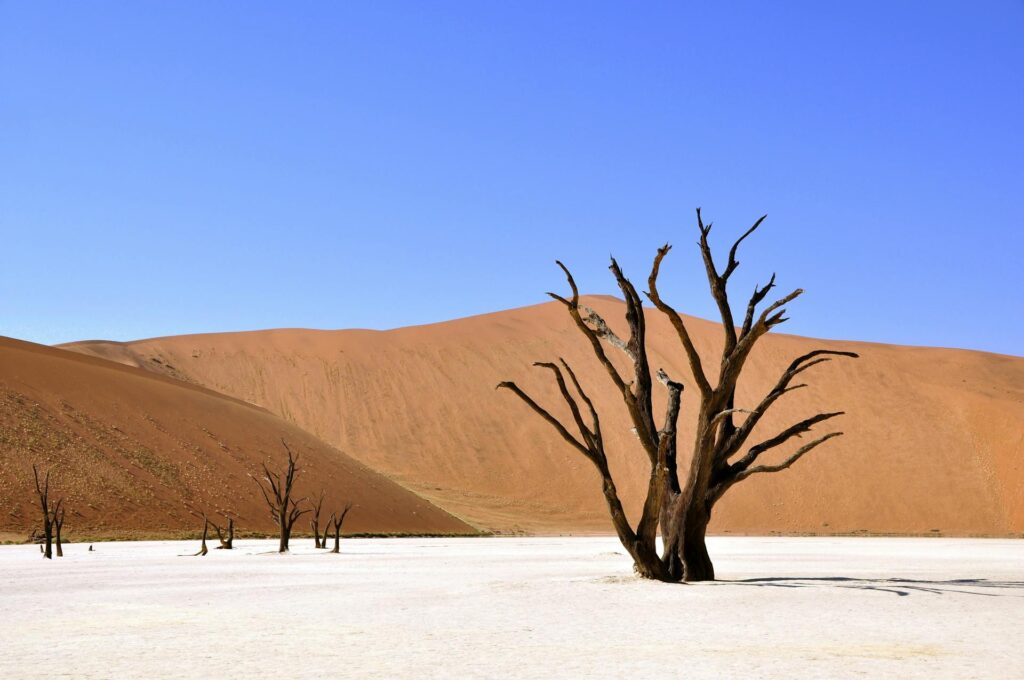
Namibia safaris are defined by space, silence, and dramatic landscapes. It is one of Africa’s most visually striking destinations, where wildlife adapts to deserts, mountains, and vast open plains.
Rather than dense game concentrations, Namibia offers rare species, low visitor density, and extraordinary scenery. It consequently suits travellers who value atmosphere as much as wildlife.
Wildlife & Species in Namibia
Namibia hosts species adapted to extreme environments, including:
- Desert-adapted elephant and lion
- Black rhino (especially in protected conservancies)
- Cheetah across open plains
- Oryx, Hartmann’s mountain zebra, and springbok
- Endemic birdlife unique to arid regions
As a result, wildlife encounters are often uncrowded and deeply immersive.
Key Safari Regions
Etosha National Park
One of Africa’s great wildlife parks, Etosha centres on a vast salt pan that draws animals to permanent waterholes, particularly during the dry season.
Damaraland
A rugged, remote region carrying desert-adapted wildlife, ancient rock art, and dramatic geological formations. Furthermore, it supports some of the most significant black rhino populations outside formal reserves.
Skeleton Coast
A stark and haunting landscape of shipwrecks, fog, and raw Atlantic coastline, often combined with inland desert regions for a journey of considerable contrast.
Namib Desert & Sossusvlei
Towering red sand dunes, salt pans, and surreal desert scenery define this region. Indeed, it offers one of Africa’s most iconic visual experiences.
Landscape & Experience
Namibia journeys are shaped by:
- Expansive desert vistas and minimal human presence
- Long scenic drives and fly-in safaris
- Emphasis on conservation-based private concessions
Experiences typically include guided nature drives, walking safaris, scenic flights, and cultural interactions with local communities.
Travel Style & Suitability
Namibia particularly suits:
- Repeat safari travellers
- Photography and landscape-focused journeys
- Couples seeking privacy and tranquillity
- Slow, scenic exploration rather than fast-paced safaris
Moreover, it pairs exceptionally well with other Southern African destinations.
Best Time to Visit
Namibia is a year-round destination with distinct seasonal character:
- May to October: Dry season, best for wildlife viewing
- November to April: Green season with dramatic skies and fewer visitors
Additionally, the desert climate ensures comfortable travel for most of the year.
Explore More of Southern Africa
Namibia combines seamlessly with neighbouring destinations:
Back to the region overview:
Southern Africa
Begin Planning
Namibia safaris reward patience, curiosity, and an appreciation for wide open spaces. In short, every journey moves at the pace of the land itself.
Plan your Namibia journey on WhatsApp:
WhatsApp Us